Why Two Lenses at the Same f-Stop Can Live in Completely Different Worlds
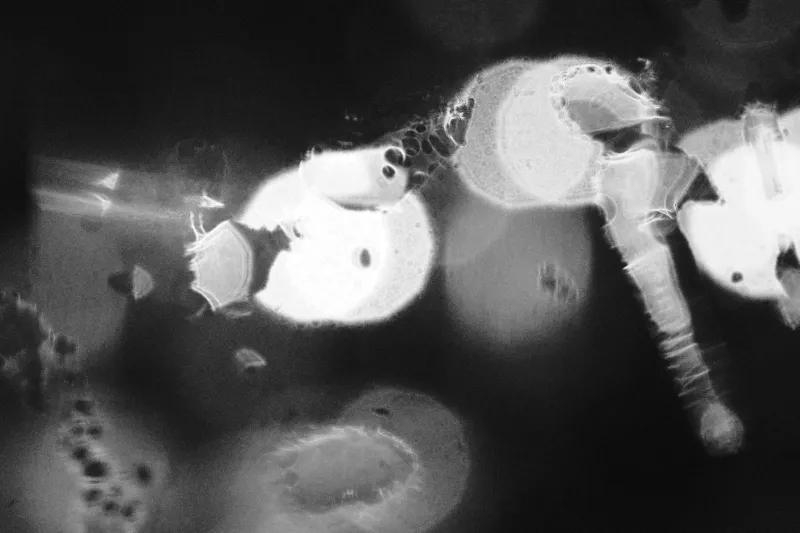
Every photographer has had that moment. You're scrolling Instagram, and you see a shot from a friend — same f-stop, same focal length, same general vibe — and yet their out-of-focus highlights are buttery orbs while yours look like something between a hockey rink and a stop sign.
It's tempting to blame your technique. Don't. The truth is that blur has a fingerprint, and that fingerprint is shaped by decisions made by lens engineers long before you ever picked up a camera. Here's what's actually going on inside that glass.
The Aperture Is the Pen, the Blades Are the Handwriting
Start with the obvious suspect: the aperture diaphragm. The shape and number of aperture blades determine the shape of every out-of-focus point of light in your frame.
A lens with nine rounded blades — think of many modern portrait primes — renders highlights as soft, near-circular discs. A lens with seven straight blades turns those same lights into heptagons. Shoot an old manual-focus Minolta or a vintage Pentax wide open, and city lights become a constellation of geometric shapes. That's not a defect; it's character, and some photographers chase it on purpose.
But here's where it gets interesting: blades only tell half the story. Stop down to f/4 or f/5.6, and the aperture opening shrinks toward a polygon no matter how many blades you have. So when two lenses at f/1.8 still look wildly different, something deeper is at play.
Spherical Aberration: The Beautiful Flaw
Perfect lenses are boring lenses. Spherical aberration — the tendency of light passing through the edge of a lens element to focus at a slightly different point than light through the center — is technically an optical imperfection. It's also the secret sauce behind gorgeous blur.
When a lens leaves a bit of spherical aberration uncorrected, out-of-focus highlights get a soft, glowing halo instead of a hard edge. Correct it too aggressively, and highlights become crisp rings with defined borders — the "onion ring" effect you've probably seen in some fast 50mm lenses. Neither is objectively better, but they create completely different moods.
The Petzval-style lenses that Helios made famous take this even further. Their swirl — that hypnotic rotation of background blur around sharp edges — comes from field curvature and astigmatism, the kinds of things lens designers usually try to eliminate. Vintage glass wears its imperfections proudly, which is exactly why a 1970s Helios 44-2 sells for a fraction of a modern prime and still has a devoted American following among portrait shooters.
Cat Eyes and the Physics of the Frame
Ever noticed that highlights near the corners of your frame turn into ovals — little cat eyes — while the center highlights stay round? That's mechanical vignetting at work. When the light cones from the corners of the frame get clipped by the lens barrel itself, the effective aperture narrows at the edges, squashing those bokeh balls sideways.
Some lenses do it subtly. Ultra-fast lenses — the f/1.2 and f/0.95 crowd — do it dramatically. Whether you find cat eyes charming or distracting says a lot about your style, but knowing the cause means you can stop wondering whether your lens is broken. It isn't. It's physics.
Coatings, Contrast, and the Color of Nothing
Blur isn't just about shape — it's about color and contrast too. Lens coatings, designed to fight flare and ghosting, subtly change how out-of-focus areas render. A background with strong color transitions behind your subject can bloom into painterly gradients with one lens and stay muted with another.
The number and type of glass elements matter as well. A lens with an apochromatic or low-dispersion design will keep out-of-focus areas cleaner and more neutral. A simpler optical formula might smear chromatic aberration into the bokeh, producing purple or green fringing around highlights. Some shooters hate it. Others lean into it, especially for backlit golden-hour portraits — the kind of light you get on a California coastline or a Chicago rooftop in October.
What to Actually Look For When Buying for Blur
If bokeh is a priority, shop with your eyes, not the spec sheet. f-stops tell you how much light gets through, not what the blur looks like. Instead:
- Check sample images wide open. Look at real, unretouched shots at f/1.4–f/2, specifically with point lights in the background. String lights, street lamps, sun through leaves.
- Count the blades — and their shape. Nine rounded blades usually mean rounder highlights when stopped down.
- Read the corners. If the review photos show smooth corner blur instead of nervous, busy rendering, that lens will flatter full-body portraits.
- Test with your subject distance in mind. Blur character changes with focusing distance. A lens that's dreamy at six feet might be clinical at twenty.
Your Blur, Your Signature
The takeaway isn't that one rendering is right. It's that bokeh is a design choice — made by the engineers, yes, but ultimately by you. Two photographers at the same f-stop will always live in different worlds. The fun part is figuring out which world you want to shoot in, and then finding the glass that gets you there.
So next time your blur doesn't match the shot you saw online, don't chase the settings. Chase the lens. Your background is trying to tell you something.