Fixed and Intentional: Why a New Generation of Portrait Shooters Is Ditching Zoom for Prime
Photo: IPPA photographer, CC BY 4.0, via Wikimedia Commons
Something interesting is happening in portrait photography right now, and it's showing up in gear bags, in Instagram comment sections, and in the film photography revival that refuses to die. A noticeable slice of Gen-Z and millennial photographers — people who grew up with smartphones in their hands, who learned composition through a 6-inch screen — are making a deliberate, almost defiant pivot toward fast prime lenses.
Not zooms. Not the computational photography built into every phone released in the last four years. Fixed focal lengths. Manual focus rings. Real bokeh that no algorithm decided to add.
And the reason why is more interesting than you might think.
The Portrait Landscape Right Now
Let's be honest about the current state of things. Smartphone portrait mode has gotten genuinely impressive. The computational depth estimation in recent iPhone and Pixel releases can fool a casual viewer. AI-generated subject separation and background blur has improved to the point where the average person scrolling their feed can't tell the difference between a phone shot and something taken with a dedicated camera.
For a lot of photographers, that's threatening. For the ones we're talking about here, it's clarifying.
If the output of your phone's AI can approximate the output of a fast lens, then the value of using a fast lens can no longer just be the output. It has to be something else. It has to be the process. The intention. The physical, tactile experience of making a photograph that a machine couldn't make the same way even if it tried.
What a Prime Actually Gives You
Here's the thing about prime lenses that gets lost in the zoom-vs-prime debate: it's not really about sharpness, and it's not even primarily about maximum aperture, though both matter. It's about the relationship between the photographer and the frame.
When you're working with a fixed focal length — say a 50mm f/1.4 or an 85mm f/1.8 — you can't zoom your way to a composition. You move. You choose your distance from the subject, and that choice directly affects the compression, the perspective, and the character of the bokeh in the background. Get closer with a 50mm and you get a more environmental feel, with wider bokeh spread. Step back with an 85mm and you get that beautiful telephoto compression, subject isolation, and those tight, creamy background circles that portrait photographers have chased forever.
Every decision is physical. Every decision is yours. The algorithm doesn't get a vote.
The Authenticity Angle
This is where it gets cultural rather than technical, and honestly it's the more interesting part of the conversation.
Visual content is more homogenized than it has ever been. Not because people lack creativity, but because the tools that most people use — smartphone cameras, AI editing apps, template-driven platforms — are designed to produce outputs that perform well according to engagement metrics. That means smooth skin, clean backgrounds, balanced exposure, faces centered in frame. It means content that looks like content.
For photographers who care about their work as art rather than content, that's a problem. And the response, increasingly, is to build friction back into the process on purpose.
Fast primes are friction. You can't just stand in one spot and zoom until it looks right. You can't let the phone decide how much blur is appropriate for the scene. You're making hundreds of micro-decisions every time you raise the camera, and those decisions accumulate into something that has a genuine point of view.
That's not just a photography preference. In 2025, for a generation that grew up watching AI flatten creative output across every medium, shooting with a prime lens is a small act of resistance.
The Lenses People Are Actually Reaching For
It's worth getting specific here, because the gear choices are telling.
On the more accessible end, the Canon 50mm f/1.8 — the "nifty fifty" — has seen a genuine resurgence. It's cheap, it's sharp when you need it to be, and wide open it produces soft, characterful bokeh that reads as distinctly human compared to phone portrait mode. A lot of photographers getting serious about their craft start here and stay longer than they expected.
The 85mm f/1.8 in various mounts (Canon, Sony, Nikon — take your pick) remains a portrait standard for good reason. The focal length is flattering, the working distance is comfortable, and the background separation at f/1.8 is genuinely dramatic without being clinical.
On the higher end, lenses like the Sigma Art 85mm f/1.4 and the Sony 85mm GM have become almost status objects in certain photography communities — not because of snobbery, but because the bokeh character of those lenses is genuinely distinct and recognizable. There's a reason people talk about "Sigma bokeh" and "GM rendering" as specific aesthetic qualities.
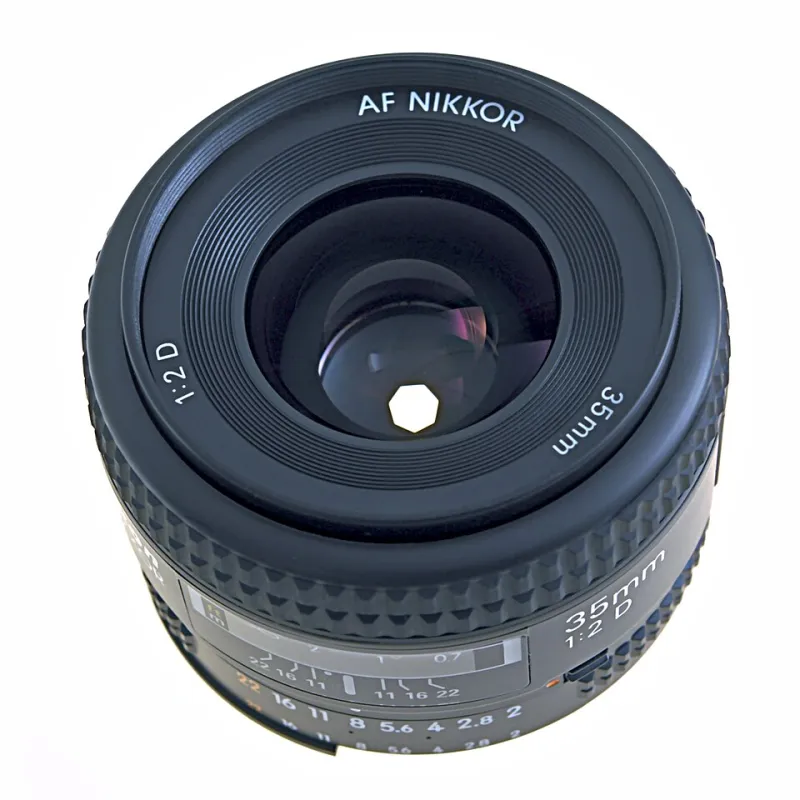
Vintage glass is another thread running through this resurgence. Older Helios, Takumar, and Nikkor lenses adapted to modern mirrorless bodies produce swirly, idiosyncratic bokeh that no AI has successfully replicated, because the "flaws" are too unpredictable and too specific to the individual glass.
The Tactile Argument
There's one more thing worth naming here, and it's less about photography and more about how we relate to our creative tools.
Shooting with a prime lens on a dedicated camera is a physical experience in a way that tapping a shutter button on a phone simply isn't. You're holding weight. You're turning focus rings. You're feeling the aperture click into place. You're making a thing with your hands in a way that involves your whole body, not just your thumb.
For photographers who got into this because they love the act of making images — not just having images — that physicality matters enormously. It slows you down. It makes each frame feel like a decision rather than a capture. And that slower, more deliberate pace tends to produce work that looks deliberate, because it is.
So Is This a Trend or a Shift?
Honestly? Probably both, and that's okay. Some of the photographers currently shooting 85mm primes will drift back to convenience zoom setups when life gets busy. That's fine. But a meaningful number of them are going to stick with it, because they've experienced what intentional bokeh feels like when you made it — not an algorithm.
The blur in a prime lens portrait carries information that AI blur doesn't. It tells you about the distance between the photographer and the subject. It tells you about the light that was actually in the room. It's a record of a real decision made by a real person in a real moment.
In a feed full of computational perfection, that imperfect, intentional blur is starting to look like the most authentic thing in the room.