Glass Over Megapixels: Why a Smart Lens Upgrade Beats a New Camera Body Every Time
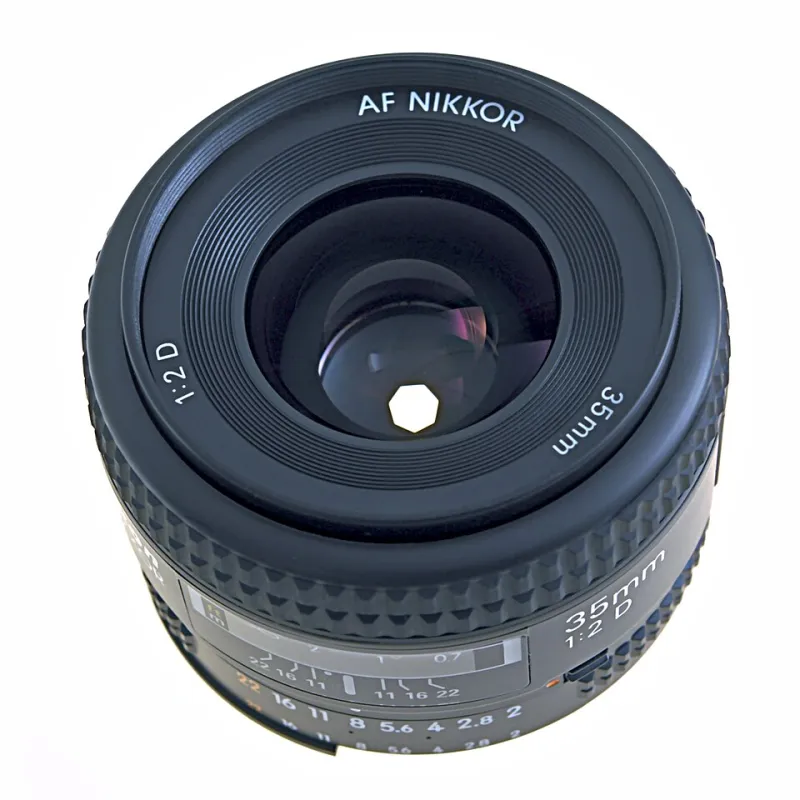
Photo: Unknown, Public domain, via Wikimedia Commons
The Myth That's Costing Photographers Money
Walk into any camera shop in America and you'll probably hear the same pitch: upgrade your body, upgrade your photos. It's a seductive idea, especially when manufacturers are rolling out new sensors every 18 months with promises of better dynamic range, faster autofocus, and cleaner high-ISO performance. But here's the thing nobody in that store is rushing to tell you — if beautiful, creamy background blur is what you're after, the body is almost never the bottleneck.
Bokeh — that soft, luminous quality where out-of-focus elements melt into painterly pools of light — is fundamentally a lens story. And once you understand the optical physics driving it, you'll never look at gear purchases the same way again.
It All Starts with the Aperture Blades
Let's get into the weeds for a second, because this is where things get genuinely fascinating. When light passes through a lens and hits your sensor, points of light that fall outside the plane of focus don't render as sharp dots — they spread out into what optical engineers call "circles of confusion." The shape and character of those circles? That's your bokeh.
The aperture diaphragm — the iris-like mechanism inside your lens — controls how light enters, and its blade count and curvature have an enormous influence on the aesthetic quality of blur. A lens with seven rounded aperture blades will produce soft, circular bokeh discs that most photographers find pleasing. A cheaper lens with five straight blades? You'll start to see pentagonal or hexagonal shapes in your highlights, which can look mechanical and distracting.
This is purely a lens construction issue. Your camera body has absolutely zero say in it.
"The aperture blade geometry is one of the first things we discuss when designing a new lens," says Marcus Reilly, an optical engineer who has worked with several independent lens manufacturers. "Photographers obsess over sensor specs, but the blade count and curvature are baked into the lens at the design stage. You can't software-patch your way to rounder bokeh."
Focal Length: The Other Half of the Equation
Here's another variable your camera body can't touch: focal length. Longer focal lengths compress perspective and produce shallower depth of field at equivalent apertures, which means more of the background falls outside the focus plane — and more of it gets that gorgeous blur treatment.
A 85mm f/1.8 prime lens is practically legendary in portrait photography circles for exactly this reason. It's long enough to flatter facial proportions, fast enough to throw backgrounds into oblivion, and you can find excellent versions from third-party manufacturers like Rokinon or Yongnuo for well under $300. Slap that lens on a mid-range mirrorless body and you'll consistently out-blur someone shooting kit glass on a flagship $3,000 camera.
The math just doesn't lie. A $200 fast prime on a $600 body will produce more compelling bokeh than a $2,500 body paired with the 18-55mm kit zoom it shipped with. Every time.
Lens Construction: The Premium You Can Actually See
Now, not all budget lenses are created equal, and this is where a little homework pays off. The internal construction of a lens — the number of elements, the coatings on each element, the tolerances in the barrel — all affect how cleanly light transitions from sharp to soft.
High-end lenses from Canon, Nikon, Sony, and specialty manufacturers like Zeiss or Voigtländer invest heavily in reducing optical aberrations like coma, which causes point light sources to smear into comet-like shapes in the corners of the frame. They also use aspherical elements to control how smoothly the blur transitions — what photographers often describe as "nervous" versus "smooth" bokeh.
So yes, a $1,200 Sigma Art lens will likely produce more refined blur than a $150 manual prime. But here's the kicker: that $1,200 Sigma will still outperform a $2,000 camera body upgrade in terms of bokeh quality, because the body simply isn't in the conversation.
"Sensor size does play a role," Reilly acknowledges, "because a larger sensor requires a longer focal length to achieve the same field of view, which inherently creates shallower depth of field. But within the same sensor format — say, you're staying in the APS-C world — the lens is doing almost all the heavy lifting for bokeh."
The Practical Decision Framework
So how do you actually decide where to spend your money? Here's a straightforward way to think about it:
If your current camera body is less than five years old and you're shooting in decent light conditions, stop looking at new bodies. Seriously. The marginal improvement in bokeh is essentially zero. Instead, ask yourself what focal length you're missing. Do you shoot portraits without a fast 85mm or 50mm? That's your upgrade path.
If you're switching sensor formats — say, going from Micro Four Thirds to full frame — that's a legitimate reason to buy a new body, because the larger sensor will give you access to shallower depth of field across the board. But budget accordingly for new glass, because your old lenses won't fully leverage the new sensor's potential.
If you're shooting with a kit lens at f/5.6, no camera body on earth is going to save your bokeh. A fast prime in the $150–$400 range will transform your images more dramatically than any sensor upgrade.
If bokeh rendering quality specifically bugs you — say, your highlights look busy or your blur transitions feel harsh — research lens reviews that specifically discuss bokeh character. Sites like LensRentals and Photography Life do deep optical analyses. Read those before opening your wallet.
The Bottom Line
Bokeh is light doing what light does when optics bend it gently into softness. It's one of photography's most emotionally resonant qualities — the way it isolates a subject, creates intimacy, and makes images feel cinematic. And it lives almost entirely in the glass you choose.
The next time you feel that familiar itch to upgrade your camera body, do yourself a favor: rent a fast prime for a weekend first. Shoot with a 50mm f/1.4 or an 85mm f/1.8 and see what happens to your backgrounds. Odds are, you'll come home with the best bokeh of your life — and a very different shopping list.