Portrait Mode for Everyone: How Smartphones Are Tearing Down the Walls of Pro Photography
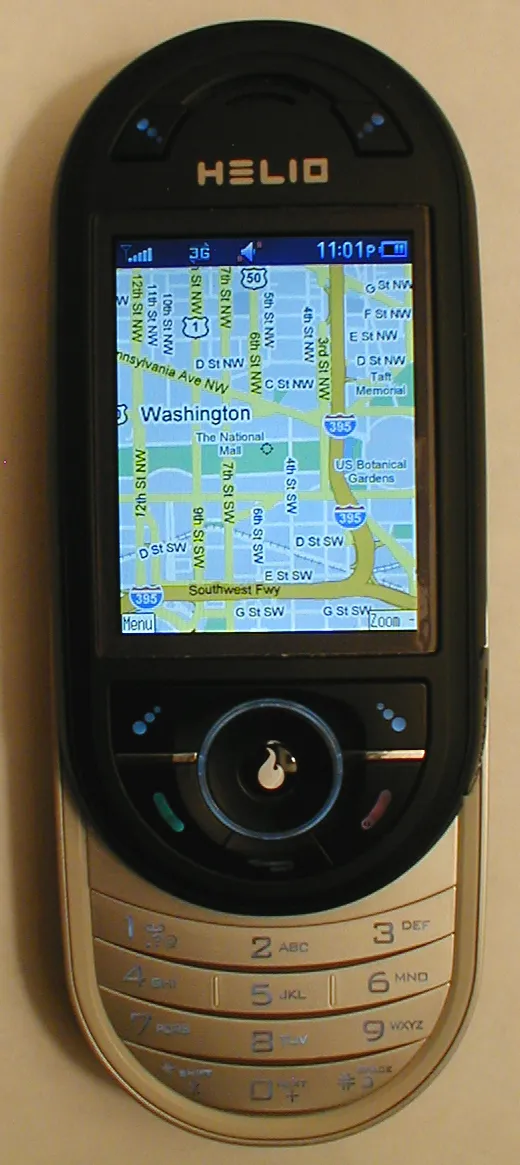
Photo: Buster8079, CC BY-SA 4.0, via Wikimedia Commons
The Camera in Your Pocket Is Doing Something Wild
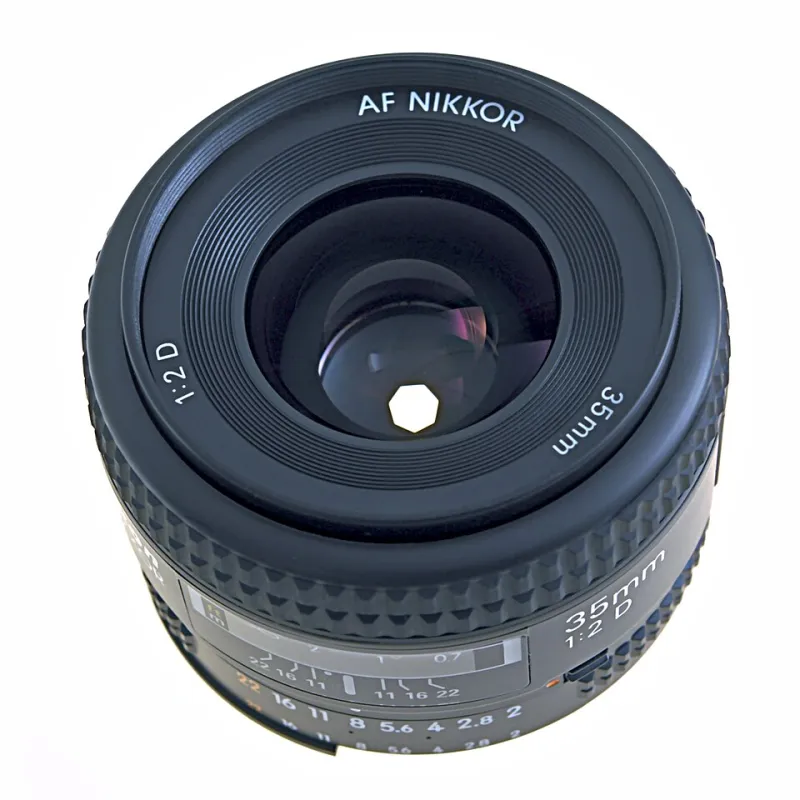
Not long ago, the conversation around beautiful, creamy bokeh started and ended with one question: what glass are you shooting with? A fast 50mm prime, maybe an 85mm f/1.4 — those were the gatekeepers. The physics were simple and unforgiving. You needed a large sensor, a wide aperture, and the kind of lens that cost more than a month's rent in most American cities.
Then smartphones happened. And more specifically, computational photography happened. And now a 17-year-old in Columbus, Ohio with an iPhone or a Pixel is producing portrait shots with subject separation that would've made a wedding photographer jealous just a decade ago.
This isn't a story about whether phone bokeh is "real" bokeh. That argument is getting old. This is a story about what happens when the tools of professional visual artistry get handed to everybody — and what that shift is doing to photography culture, gear investment, and the very idea of who gets to call themselves a serious shooter.
The Engineering Behind the Magic
To understand how we got here, you have to appreciate just how clever the engineering actually is. Traditional optical bokeh is a physical phenomenon — light from out-of-focus elements spreads across the sensor in circular discs (those gorgeous orbs you see in the background of a well-shot portrait). The size of those discs depends on aperture, focal length, and the distance between your subject and what's behind them.
Smartphones can't replicate that physics natively. Their sensors are tiny, and their lenses, even at f/1.8, don't produce meaningful optical blur on their own. So instead, they fake it — brilliantly.
Modern portrait modes use a combination of depth-mapping hardware (LiDAR sensors on higher-end devices, stereo vision on others), machine learning models trained on millions of images, and multi-lens arrays to construct a depth map of the scene in real time. The phone figures out where your subject ends and the background begins, then applies a mathematically simulated blur to everything behind that edge.
The results, especially in good light, are genuinely impressive. Recent generations of flagship phones from Apple, Google, and Samsung have gotten edge detection to a point where even flyaway hair and transparent glasses frames are handled with surprising accuracy. The blur itself has also gotten more sophisticated — early portrait modes produced a flat, unconvincing smear. Now, the falloff is more gradual, more organic-looking.
It's still not identical to optical bokeh. Ask any optical engineer and they'll tell you the micro-contrast, the transition between in-focus and out-of-focus regions, and the rendering of specular highlights still give away the computational origin. But for most viewing contexts — social media, web, even moderate print sizes — the difference is increasingly academic.
What Mobile Photographers Are Actually Doing With It
Talk to mobile photographers who've built real followings around their phone work and you'll hear a consistent theme: the tool stopped being the story a while ago.
Mobile portrait photographers working in cities like Atlanta, Los Angeles, and New York are booking paid client work — headshots, brand content, even editorial — shooting entirely on smartphones. The conversation has shifted from defending the medium to simply using it. Portrait mode is just another setting, the way a DSLR shooter thinks about aperture. It's a creative choice, not a compromise.
What's interesting is how this group approaches depth of field differently than traditional shooters. Because computational bokeh is applied in post-processing (or can be adjusted after the fact on many devices), there's a flexibility that optical shooting doesn't offer. You can dial the blur up or down, sometimes even after the shot is taken. That's a fundamentally different creative workflow — more iterative, more forgiving, more like editing than capturing.
That flexibility cuts both ways, of course. Some photographers find it liberating. Others argue it disconnects the shooter from the intentionality of the moment — that choosing your aperture before you press the shutter is part of the craft. Both perspectives have merit.
The Gear Investment Question
Here's where things get genuinely complicated for the traditional camera market. If a $1,000 smartphone can produce portrait images that satisfy 90% of clients and 99% of social media audiences, what exactly are you paying for when you drop $3,500 on a mirrorless body and a fast prime?
The honest answer is: quite a lot, still. Low-light performance, autofocus tracking on moving subjects, the ability to shoot at high frame rates, dynamic range in extreme contrast situations, and yes — true optical bokeh with all its analog imperfections — are all areas where dedicated camera systems still hold meaningful advantages.
But the gap is narrowing every product cycle. And for a huge portion of the population who wanted to make beautiful images but felt locked out by cost and complexity, that gap has already closed past the point of practical relevance.
What this means for the industry is still unfolding. Camera manufacturers are leaning harder into the things phones genuinely can't match — professional ergonomics, interchangeable systems, specialized optics. Lens makers are emphasizing the artistic character of their glass, the things that computational simulation can't reproduce. It's a pivot toward the experiential and the artisanal.
Gatekeeping Is Getting Harder to Justify
There's a cultural dimension to all of this that doesn't get talked about enough. Photography has always had a gatekeeping problem. Expensive gear created a barrier that wasn't just financial — it was social. It signaled seriousness, commitment, belonging to a particular tribe.
Computational photography is dismantling that gate whether the tribe likes it or not. And the images coming through from people who never would've invested in a dedicated camera system are, frequently, genuinely good.
The question worth sitting with isn't whether phone bokeh is as pure as optical bokeh. It's whether the purity of the tool was ever really the point. Photography, at its core, is about seeing — about finding a moment, a face, a quality of light, and making something meaningful out of it. The blur in the background is just one way of directing the eye toward what matters.
If a teenager in a mid-sized American city can now direct your eye just as effectively as a photographer with a $6,000 kit, that's not a threat to photography. That's photography doing exactly what it's always done at its best — putting the power of visual storytelling in more hands.
The renaissance isn't coming. It's already here, and it fits in your pocket.