The Blur Trap: Why Leaning Too Hard on Bokeh Is Quietly Killing Your Photos
Photo: Adam Cuerden, Public domain, via Wikimedia Commons
We Have a Blur Problem
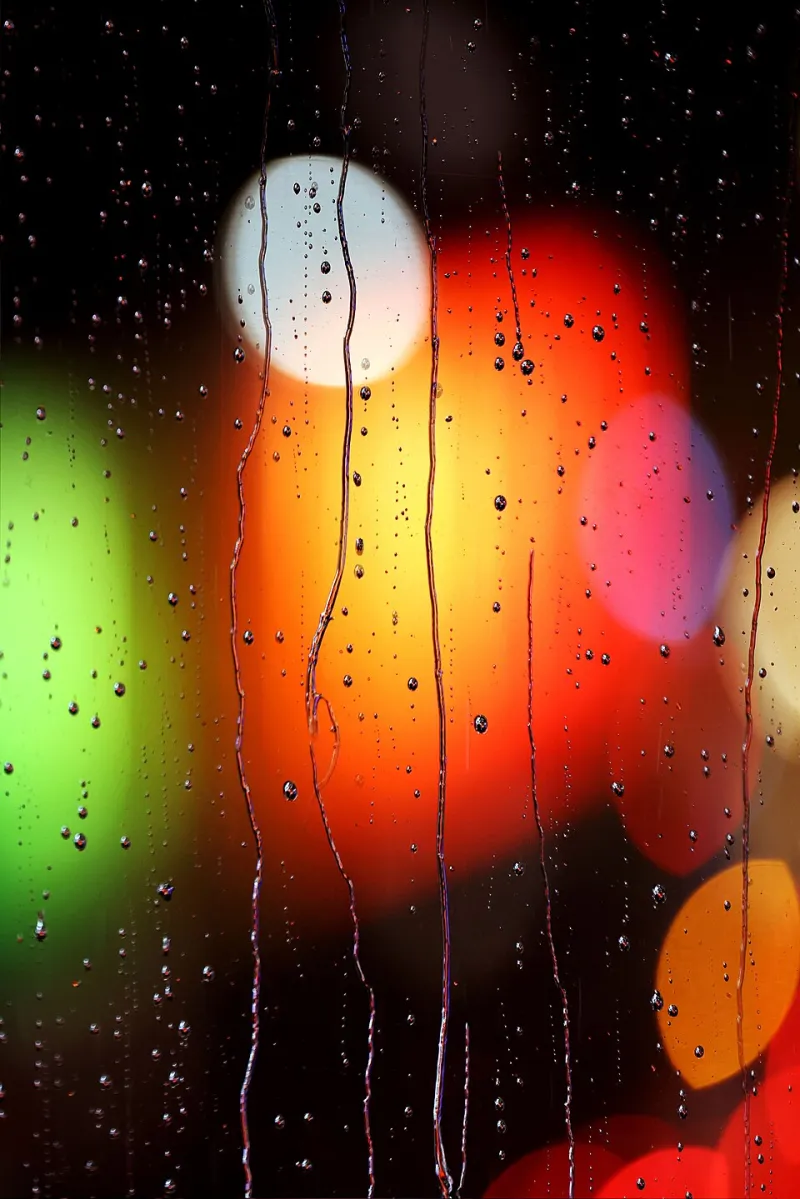
Somewhere between the rise of fast primes and the democratization of Portrait mode, bokeh stopped being a compositional tool and became a crutch. Open Instagram on any given afternoon and you'll see it everywhere: relentlessly blurred backgrounds on shots that would have been far more powerful with context, with environment, with place. The subject floats in a soft, creamy void, technically impressive and narratively empty.
This isn't a takedown of bokeh — we're literally called I Am Bokeh, so that would be a weird hill to die on. This is a conversation about intentionality. Because there's a meaningful difference between using blur to serve a photograph and using blur to hide the fact that you haven't thought the photograph through.
When Bokeh Actually Hurts the Image
Let's get specific, because "overused bokeh" is easy to say and harder to actually identify in your own work.
The context erasure problem. Environmental portraiture — street photography, documentary work, lifestyle shots — derives enormous power from the relationship between subject and surroundings. A chef photographed in their kitchen. A musician in the venue where they got their start. A kid at a county fair. When you blast the background into an undifferentiated blur, you erase that context entirely. The image becomes a headshot pretending to be a story.
Consider the difference between a sharp environmental portrait of a farmer standing in a field — where the rows of crops behind her speak to her entire livelihood — versus that same frame shot at f/1.2, where the field dissolves into anonymous green smear. The second version is technically prettier. The first one actually means something.
The subject isolation paradox. Here's a counterintuitive one: extreme bokeh can actually make your subject harder to read. When the background is so blurred that it provides zero visual anchoring, the eye can struggle to understand the spatial relationships in the frame. The subject looks like they've been cut out and pasted onto a gradient. It reads as artificial, which is ironic given that optical blur is supposed to be the "real" alternative to computational fakery.
The flat light + heavy blur combination. This one shows up constantly on social media. Flat, overcast lighting with maximum background blur produces images that feel weightless in the worst way — no shadow, no depth, no dimension. Bokeh and flat light both reduce visual information, and stacking them compounds the problem. The result is a photograph that feels like it was taken inside a sensory deprivation tank.
The Social Media Feedback Loop
Part of what's driving the over-blur trend is purely algorithmic. Shallow depth-of-field photographs tend to perform well on Instagram and TikTok thumbnails because the blurred background creates visual contrast that makes subjects pop at small sizes. Photographers notice this, consciously or not, and start optimizing for the thumbnail rather than the full image.
The problem is that what works as a thumbnail strategy is often terrible compositional logic. You end up with a portfolio full of technically consistent, emotionally interchangeable images — everything sharp in the middle, everything soft at the edges, nothing actually saying anything.
This is the blur trap. And a lot of talented photographers are stuck in it.
Case Study: The Wedding Photography Blur Epidemic
Wedding photography offers a useful case study because the genre has fully embraced shallow depth-of-field as its default aesthetic. And while there are genuinely stunning examples of bokeh-forward wedding work, the average wedding album has started to feel monotonous in a specific way: every detail shot blurred to near-abstraction, every candid moment shot wide open regardless of whether the scene calls for it.
A wedding is a documentary event as much as it is an aesthetic one. The venue matters. The family dynamics visible in a wide group shot matter. The chaos of a getting-ready room matters. When every single frame is shot at f/1.4 or f/1.8, that documentary texture disappears. You get beautiful photographs of a wedding that could have happened anywhere, to anyone.
The photographers who stand out in that genre right now are the ones mixing their approaches — knowing when to go wide open for intimacy and when to stop down and let the environment breathe.
How to Break the Reflex
If you've recognized some of your own habits in this piece, here's how to recalibrate.
Ask what the background is doing. Before you shoot, look at what's behind your subject. Is it interesting? Does it add information or mood? If yes, consider whether some of that should stay in focus. If it's genuinely distracting — a dumpster, a parking lot, a stranger making a face — then blur away with a clear conscience.
Try a week at f/5.6. Force yourself off the wide-open habit by shooting a full week at a moderate aperture. You'll start making better decisions about composition, light, and background selection because you can't hide behind the blur. It's uncomfortable. It's also extremely instructive.
Look at the photographers you actually admire most. Pull up the work of the photographers who genuinely move you — not the ones with the most Instagram followers, but the ones whose images you keep coming back to. Count how many of those images use extreme background blur. You might be surprised by how often the answer is "not many."
Reserve blur for emotional beats. Bokeh is genuinely powerful when it isolates a moment of vulnerability, tenderness, or intensity. Use it for those moments. Let it mean something when it appears in your work rather than being the visual wallpaper behind every single frame.
Blur With Purpose
None of this is an argument against bokeh. Beautiful depth-of-field effects are part of what makes optical photography feel alive and dimensional in ways that no other medium quite replicates. That's literally why this site exists.
But the most powerful version of any artistic tool is a deliberate one. When blur is a choice — when you've looked at the scene, considered what the background contributes, and decided that soft is the right call — it elevates everything. When it's just the default setting you never think to question, it's just noise.
The light blurs into art when you're paying attention. Otherwise, it just blurs.