Neon, Chrome, and Creamy Blur: A Photographer's Route 66 Bokeh Pilgrimage
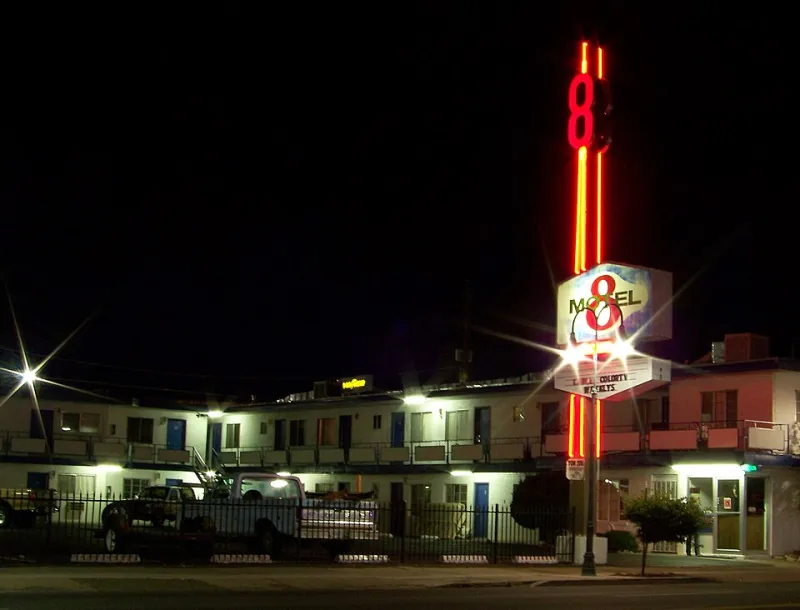
Photo: Scott Thompson, CC BY 3.0, via Wikimedia Commons
There's a moment every road-tripping photographer knows. You pull into some one-stoplight town at dusk, the neon flickers on over the diner sign, and suddenly the whole world narrows down to a pool of glowing color floating in the dark. That moment? That's bokeh calling your name.
We've spent enough time on the interstate to know that America's small towns are basically a free masterclass in out-of-focus light. So we mapped out a blur-hunter's route — a loose loop from Chicago to the Pacific and back — with practical notes on glass, timing, and where exactly to stand.
Start Wide Open in the Windy City
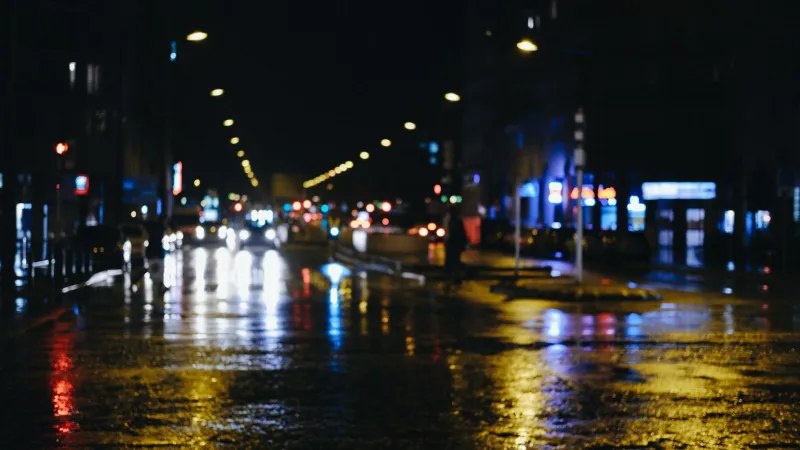
Kick things off in Chicago before you ever hit Route 66 proper. The city's vintage neon — think Wrigley Field's marquee or the old-school signs strung along Milwaukee Avenue — gives you dense clusters of point light sources, which is exactly what your bokeh balls feed on.
Gear note: a fast 50mm prime (f/1.4 or f/1.8) is your workhorse here. Shoot after blue hour when the sign light punches through, and put a little distance between your subject and those highlights. Separation is everything — a subject standing six feet in front of a neon sign will render that sign as soft, glowing orbs instead of a distracting rectangle of glare.
Diner Windows and Pie Cases
Once you're rolling through Illinois and Missouri, the classic roadside diner becomes your studio. Morning light through a window with coffee cups and chrome stools in the foreground is a cliché for a reason — but here's the trick most folks miss: shoot through things. Foreground elements like a blurred sugar dispenser or a rain-speckled window add layers of softness that make the final frame feel dimensional.
A 35mm at f/2 handles tight booths better than a longer lens. You want context in these shots — the blur should whisper "diner," not scream "random coffee shop."
Tulsa to Tucumcari: The Neon Corridor
Oklahoma and New Mexico might be the best stretch of road for bokeh in the country. Tucumcari alone has a ridiculous density of restored motel signs — the Blue Swallow is the famous one, and yes, you should shoot it. But walk a block in either direction and you'll find less-photographed gems with zero crowds.
Blue hour is your friend, but don't sleep on full dark. Once the sky goes black, every bulb on a vintage sign becomes a discrete light source, and a lens with 9 or more aperture blades will render them as clean, round circles rather than polygonal shapes. If your glass produces hexagons, stop down slightly to f/2.8 — sometimes the geometry becomes part of the story.
State Fair Interlude
If your timing lines up with late summer, detour to any state fair along your route — Minnesota, Iowa, Texas, doesn't matter. The midway at night is a bokeh amusement park, literally. Ferris wheels turn into rings of light, fried-food stalls become walls of glowing color, and the crowd noise gives you an excuse to work fast.
Pro move: slow your shutter to 1/15th, pan with a spinning ride, and let the lights smear into ribbons while your subject stays sharp. It's not pure bokeh, but the combination of motion blur and out-of-focus glow is pure Americana.
The Long Slide to the Pacific
Arizona and California give you golden hour for days. On the final legs, trade neon for natural light — eucalyptus backlit on the coastal hills, headlights snaking along Highway 1. By the time you hit the Santa Monica Pier, your eyes will be trained to see background blur everywhere: the Ferris wheel at dusk, string lights over the boardwalk, the Pacific glittering out of focus behind a stranger's silhouette.
A telephoto in the 85mm range earns its keep here, compressing the pier lights into a warm, creamy wash.
The Only Gear That Matters
Honestly? It's less about the bag and more about the habits. Three things carried us the whole way:
- One fast prime, one zoom. Keep it simple. Gear paralysis is real when the light is fading.
- Scout in daylight, shoot at night. Know where you're standing before the neon comes on.
- Talk to people. Half our best frames happened because a diner owner left the sign on late or a fair worker let us behind the midway.
The blur was always there, waiting. America just happens to string a lot of lights across it.