Chase the Glow: 10 American Landmarks That Melt Into Liquid Light at Night
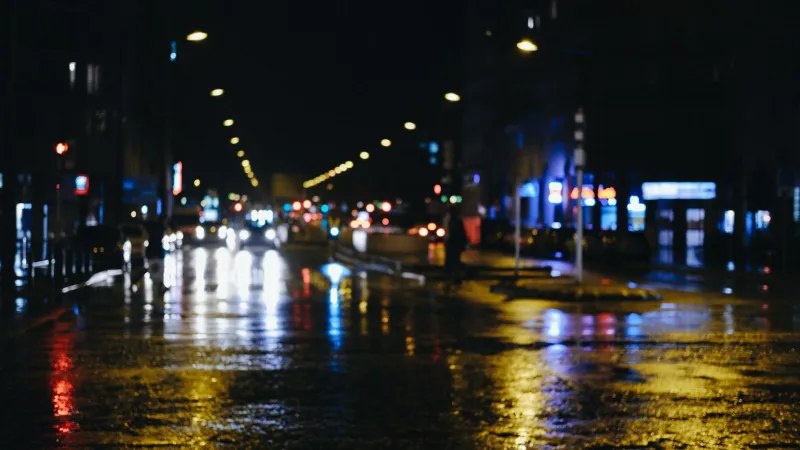
There's a moment that happens at every one of these places. The sun drops, the crowds thin out, and the lights switch on — and suddenly the whole scene turns into a canvas of glowing orbs just waiting to be pulled out of focus. If you're the kind of photographer who plans trips around light instead of landmarks, this list is your new road trip bible.
Here are ten American spots where the background blur does half the work for you.
1. Times Square, New York City
It's the most photographed intersection in the country, which is exactly why you should shoot it wide open. At f/1.4 with an 85mm, the billboards dissolve into a soup of red, cyan, and gold — almost abstract, almost unrecognizable. That's the shot.
Best time: 30–45 minutes after sunset, when the sky still holds a little blue to separate from the signage. Vantage point: The red steps at the TKTS booth put you above the crowd and level with the light.
2. Fremont Street, Las Vegas
Skip the Strip. The old-school canopy of bulbs over Fremont Street is denser and warmer than anywhere in Vegas, and the vintage neon signs produce rounder highlights than modern LEDs. A 50mm at f/1.8 turns the whole corridor into a string of glowing pearls.
Best time: 9–11 PM on weeknights, when the light show pauses and the crowd breathes. Vantage point: Shoot from the middle of the pedestrian mall looking east, then turn around — the contrast in color temperature is worth two frames.
3. The Santa Monica Pier, California
The Ferris wheel is the star, but the real gift is the row of arcade and food-stall lights receding down the boardwalk. Get low, shoot at 135mm, and let the bulbs stack into overlapping discs. Add the Pacific in the foreground and you've got a postcard nobody else has.
Best time: Blue hour, roughly 20 minutes after sunset, before the fog rolls in.
4. Beale Street, Memphis, Tennessee
Neon, brick, and live music spilling out of every doorway. The signs here are older and more idiosyncratic than most cities', and the warm tungsten mixed with pink and green neon gives your bokeh a color palette you can't fake in post.
Best time: 8–10 PM, midweek. Vantage point: The middle of the block near A. Schwab, shooting down the street for layered depth.
5. Coney Island, Brooklyn
The Cyclone and the Wonder Wheel light up like a carnival that never got the memo to grow up. The boardwalk lamps give you clean, evenly spaced highlights — perfect for testing how your lens renders out-of-focus point sources.
Best time: June through August, 9 PM onward.
6. The Strip District, Pittsburgh
An under-the-radar pick. The old market district's string lights, produce stands, and warehouse windows create a gritty, warm blur that feels more like a film still than a travel photo. A 35mm keeps enough context while the backgrounds melt.
Best time: Early evening, just as the shops close and the streetlights take over.
7. The Midway at a County Fair (Anywhere, USA)
We're cheating here — the location is a genre. Pick any state fair or county fair from August through October. Ride lights are motion-friendly, high-contrast, and densely packed. Shoot the Tilt-A-Whirl at 1/15th of a second wide open and the blur becomes both subject and background.
Best time: Dusk through closing, when the rides hit full brightness.
8. Bourbon Street, New Orleans
The balconies, the gas-style lamps, the neon daiquiri signs — the French Quarter layers light at three different heights, which means your bokeh stacks in depth instead of a flat plane. A 200mm compresses it all into a wall of glowing color.
Best time: 10 PM on a weeknight. Trust us on the weeknight part.
9. Route 66, Tucumcari, New Mexico
The vintage motel signs along the Mother Road — the Blue Swallow especially — are glowing time capsules. Tube-driven neon renders softer and warmer than anything modern. Shoot at f/2 with the sign just out of focus behind your subject and you'll understand why road-trip photographers keep coming back.
Best time: Civil twilight, when the sky's deep blue balances the sign's warmth.
10. Niagara Falls, Ontario Side... Actually, the American Side
The falls get the illumination treatment every night, and the mist catches and scatters the colored lights into something genuinely otherworldly. Defocus the spray and you get bokeh with texture — soft-edged, breathing, alive. It's the rare landmark where the blur itself moves.
Best time: The illumination runs from dusk to around midnight; go in the off-season for thinner crowds.
Pack Light, Shoot Wide
A fast prime or two — an 85mm and a 35mm will cover most of these — plus a spare battery and comfortable shoes. The best bokeh road trips aren't about the gear; they're about showing up when the light does.
So pick a weekend, pick a direction, and go find out what your lens does when the whole country turns on its lights.