Layers of Love: How Wedding Photographers Are Using Depth of Field to Unfold a Story
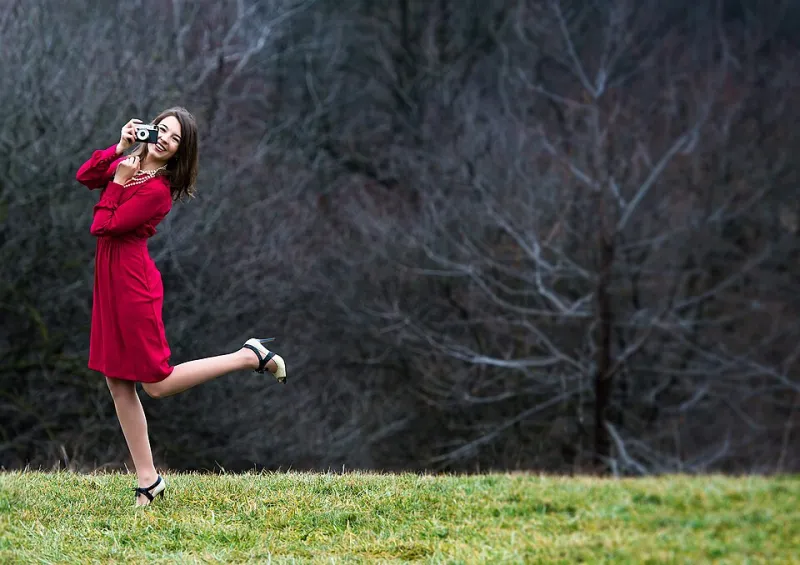
Photo: Evgeny Tchebotarev, CC BY 3.0, via Wikimedia Commons
There's a moment at almost every wedding — a quiet one, sandwiched between the chaos of the ceremony and the noise of the reception — where everything just lands. The couple steals a glance. A parent wipes a tear they weren't expecting. A flower girl spins in the aisle, oblivious to everything. And the photographers who really nail these moments? They're not just pressing a shutter at the right time. They're building a visual architecture around the emotion, using focus and blur as their raw materials.
Layered depth of field — the practice of intentionally composing a shot with multiple distinct focus planes — has quietly become one of the most powerful storytelling tools in modern wedding photography. And the photographers doing it best aren't just thinking about pretty bokeh. They're thinking about sequence, relationship, and meaning.
It's Not Just Background Blur Anymore
For a long time, bokeh in wedding photography meant one thing: creamy, soft backgrounds that made the subject pop. Shoot wide open, blur out the reception hall, done. Beautiful, sure. But also kind of flat in terms of narrative.
The shift happening now is more deliberate. Photographers are treating the entire frame — foreground, midground, background — as three distinct storytelling zones, each carrying its own emotional weight.
"I think of it like a film establishing shot," says Denver-based wedding photographer Mara Okonkwo. "The background tells you where you are. The subject tells you who you're watching. But the foreground? That's the texture of the moment. That's atmosphere. When I let a wine glass or a veil blur in the foreground, I'm not being lazy — I'm giving the viewer a way into the scene."
That foreground blur acts almost like a whisper before the main story. It sets a mood. It says you're here, inside this moment, not watching it from the outside.
Guiding the Eye Without Forcing It
One of the more fascinating things about the layered approach is how it mimics the way human attention actually works. We don't take in a scene all at once. Our eyes move, linger, drift. A well-constructed depth-of-field composition does the same thing — it creates a visual path.
Philadelphia-based cinematographer and photographer Jerome Lattimore, who shoots both stills and short wedding films, describes it as "choreographing attention."
"If everything is in focus, the viewer doesn't know where to go," he explains. "But if I've got a soft cluster of guests in the foreground, a sharp couple in the middle, and a gently blurred chandelier in the back, I've basically handed them a map. They'll move through the frame the way I want them to — and it'll feel completely natural, like they made the choice themselves."
This kind of intentional layering is especially powerful during emotionally dense moments — a first look, a ring exchange, a father-daughter dance. These aren't just single-subject shots. They're relational. There are multiple people, multiple emotions, all happening simultaneously. Bokeh becomes a way to prioritize without erasing.
The Technical Side of Emotional Storytelling
So how do photographers actually pull this off in the unpredictable, often chaotic environment of a wedding day?
It starts with glass. Photographers committed to this approach tend to lean heavily on fast prime lenses — 50mm f/1.4, 85mm f/1.2, 35mm f/1.8 — that give them the shallow depth of field they need to work with multiple planes. But shooting wide open in a dynamic environment requires serious technical confidence. Focus accuracy matters enormously when you're working at f/1.4 with three distinct zones in play.
"I'm not shooting wide open because it looks cool," says Okonkwo. "I'm shooting wide open because I know exactly what I'm doing with it. There's a difference between happy blur and intentional blur."
Composition matters just as much as aperture. Lattimore talks about actively hunting for foreground elements on location scouts — a branch, a decorative arch, a cluster of candles — anything that can serve as a soft frame within the frame. "I'm always asking, what can I put between me and the moment that makes the moment feel more real?"
Focus stacking in post is another technique some photographers are experimenting with, though most purists prefer to get the layered effect in-camera. The control you have in the moment is different from what you can manufacture afterward, and it shows.
When Blur Reveals Relationship
Perhaps the most emotionally sophisticated application of this technique is using selective focus to show the relationship between people, not just the people themselves.
Imagine a shot where a bride is sharp in the foreground, and her mother — slightly out of focus, just barely — is visible behind her, watching. The blur doesn't diminish the mother. It contextualizes her. She's present but at a remove, watching her daughter begin something new. That soft focus carries an entire emotional story about transition, about love that observes rather than intervenes.
"Bokeh can communicate distance," says Lattimore. "Emotional distance, physical distance, the distance between who someone was and who they're becoming. I think about that a lot at weddings, because weddings are fundamentally about change."
This kind of intentional blurring of secondary subjects — keeping them visible but not dominant — is a technique borrowed from cinema, where rack focus and shallow depth of field have been used for decades to externalize interior states. Wedding photographers are bringing that cinematic literacy to still images, and the results can be quietly devastating in the best possible way.
The Viewer Experience
What makes layered bokeh storytelling so effective ultimately comes down to how it feels to look at. A flat, everything-in-focus documentary shot tells you what happened. A carefully layered, multi-plane composition makes you feel like you were there.
There's an intimacy to it. The soft foreground blur suggests you're close, tucked inside the moment rather than observing it from a respectful distance. The sharp subject pulls your emotion in. The soft background reminds you that life is still happening around this singular, crystalline instant.
For couples looking back at their wedding photos years later, that immersive quality is everything. It's the difference between a record and a memory.
"I want people to look at their photos and feel something in their chest," says Okonkwo. "Not just recognize what happened — feel it. Bokeh, when you use it right, does that. It's not decoration. It's emotion made visible."
And honestly? That's what this whole craft is about. Light blurring into art. Moments becoming meaning. One carefully placed focus plane at a time.