Blur Is Back, Baby: Why Luxury Brands Are Going All-In on Aggressive Bokeh

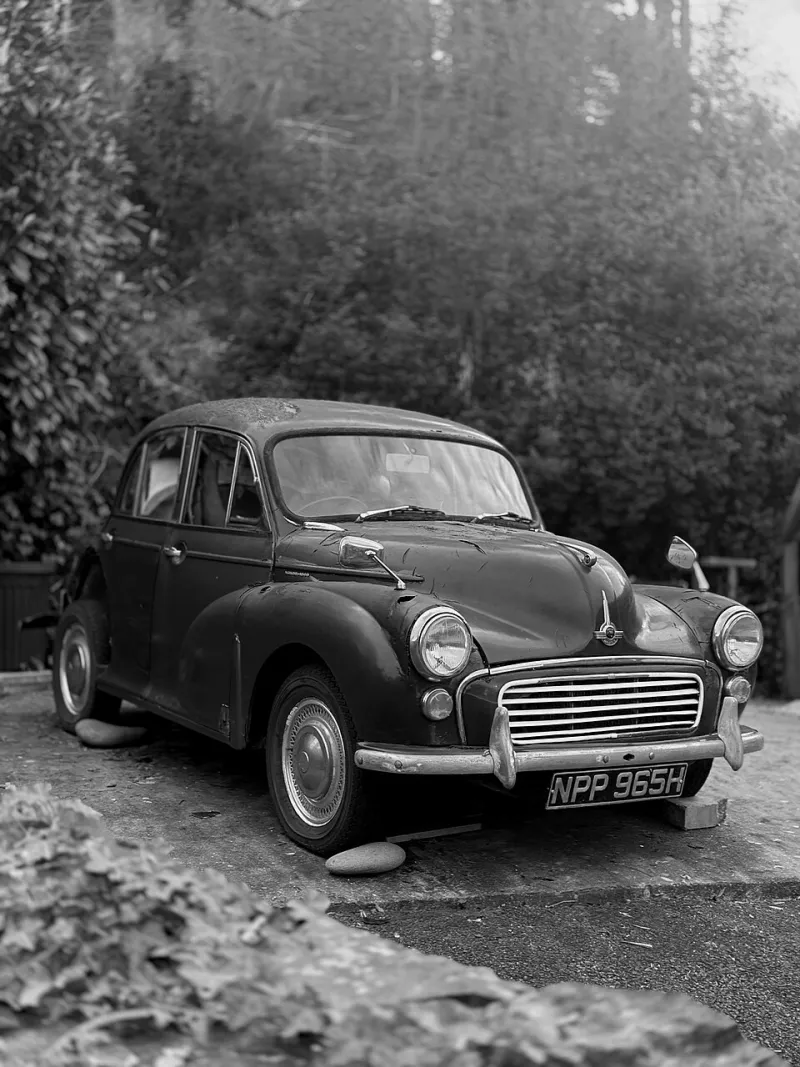
Photo: Wilfredor, CC0, via Wikimedia Commons
The Backlash Against Clean
Spend five minutes scrolling through brand content from the mid-2010s and a pattern emerges immediately. White backgrounds. Flat lay compositions. Crisp, edge-to-edge sharpness. Everything in its place, every detail visible, every pixel accounted for. It was a visual language built for e-commerce, for mobile screens, for the scroll — efficient, informative, and almost aggressively sterile.
It worked. And then it worked too well. By the early 2020s, the aesthetic had become so ubiquitous that it stopped communicating anything at all. When every brand looks the same, the visual language stops being a signal and becomes noise.
Enter the blur.
Not the accidental blur of a missed focus or an underlit shot. Deliberate, aggressive, maximalist bokeh — the kind that drowns backgrounds in creamy abstraction, that lets a product or a face float in a sea of soft light and color. It's showing up in campaign imagery from luxury fashion houses, in fragrance advertising, in high-end jewelry photography, and in editorial spreads that would've been criticized as technically sloppy five years ago.
The shift is real, it's intentional, and it says something interesting about how visual trends move in commercial photography.
What Blur Actually Communicates
To understand why bokeh is having this moment in commercial work, it helps to think about what aggressive depth of field actually does to a viewer's experience.
Sharpness communicates information. When everything in a frame is in focus, you're being shown details — the texture of a fabric, the finish on a product surface, the specifics of a scene. It's a mode of documentation. It says: look at all of this.
Blur, on the other hand, communicates feeling. A shallow depth of field collapses the background into abstraction and forces the viewer's attention onto a single point. It creates intimacy. It mimics the way human vision actually works — we focus on one thing and everything else softens. When a brand shoots a product in a way that mirrors natural human perception, it creates an almost subconscious sense of authenticity.
More than that, extreme bokeh is expensive to do well. It requires fast glass, skilled photographers who understand focus at wide apertures, and a willingness to sacrifice information for atmosphere. Consumers may not consciously register the f/1.2 aperture, but they feel the result — something that looks considered, crafted, unhurried. In a market where luxury is increasingly defined by the appearance of effort and artisanship, that feeling is worth a lot.
The Campaigns Leading the Charge
Look at fragrance advertising and you'll see this aesthetic working at full intensity. Perfume has always leaned into the impressionistic — you can't photograph a smell, so you photograph a feeling. But recent campaigns from major fragrance brands have pushed the blur further than the category has historically gone. Backgrounds aren't just soft; they're fully dissolved. Subjects are lit in ways that create glowing halos of bokeh around them. The product itself is sometimes barely sharp, existing within the blur rather than above it.
High-end jewelry photography is doing something similar. The traditional approach — sharp stone, sharp setting, controlled studio light — is giving way to images where the jewelry exists in a context of soft, warm blur. Candles. Fabric. Hands. The sharpness is selective, pulling the eye to the piece while wrapping it in an atmosphere that communicates romance and occasion rather than specification.
Fashion editorial, always a few steps ahead of commercial work in terms of willingness to experiment, has been here longer. Photographers shooting for the major glossies and for luxury brand campaigns have been pushing shallow depth of field as an expressive tool for years. What's newer is seeing that influence migrate into direct commercial work — the kind of photography that has traditionally prioritized product clarity above all else.
The Cyclical Nature of Commercial Visual Language
None of this is happening in a vacuum. Visual trends in commercial photography have always moved in cycles, and those cycles are usually driven by a combination of technology, cultural mood, and the natural human desire to differentiate from whatever came before.
The sterile, hyper-sharp aesthetic that dominated the 2010s was partly a product of the smartphone revolution — images needed to read clearly at small sizes on bright screens. It was also a product of the direct-to-consumer e-commerce boom, which prioritized product information over brand atmosphere.
As that aesthetic became the default, it lost its power to signal quality. The brands that started pushing against it — reaching for more atmospheric, more textural, more emotionally resonant imagery — found that the contrast itself communicated something. Looking different, when different means looking more considered and more artful, is a competitive advantage.
There's also a generational dimension. Younger consumers who grew up with hyper-curated social media aesthetics are increasingly drawn to imagery that feels less produced, more human. Ironically, technically demanding bokeh-heavy photography achieves that — the blur reads as organic, as real, as the kind of image a person makes rather than a content machine generates.
The AI Wrinkle
It's worth noting that the rise of AI-generated imagery is adding a new layer to this conversation. AI image generators, for all their capabilities, have historically struggled with convincing optical bokeh — the physics of lens rendering are genuinely difficult to simulate at a fundamental level. Authentic, optically produced shallow depth of field has become, in a subtle way, a marker of the real.
For commercial photographers, this is an unexpected development. The qualities that make their work difficult to replicate algorithmically — the specific character of a particular lens, the way light falls through glass at f/1.4, the micro-variations in bokeh that come from real optical systems — are suddenly more valuable, not less. Maximalist blur isn't just an aesthetic choice anymore. It's a provenance signal.
Where This Goes
Like every trend, this one will peak and recede. At some point, aggressive bokeh will become as overused as the white background, and the pendulum will swing back toward something else. That's just how visual culture works — it's a constant conversation between differentiation and assimilation.
But right now, in this specific moment, blur is doing something meaningful in commercial photography. It's pushing back against sterility, signaling craft in an era of algorithmic content, and reminding both photographers and the brands they work with that atmosphere and feeling are not the enemies of effective visual communication. Sometimes they're the whole point.
The most interesting images have always lived in the space between sharp and soft. It's nice to see commercial work catching up.