The Architects of Blur: Photography Icons Who Turned Out-of-Focus Into an Art Form
Photo: Jisihod121, CC0, via Wikimedia Commons
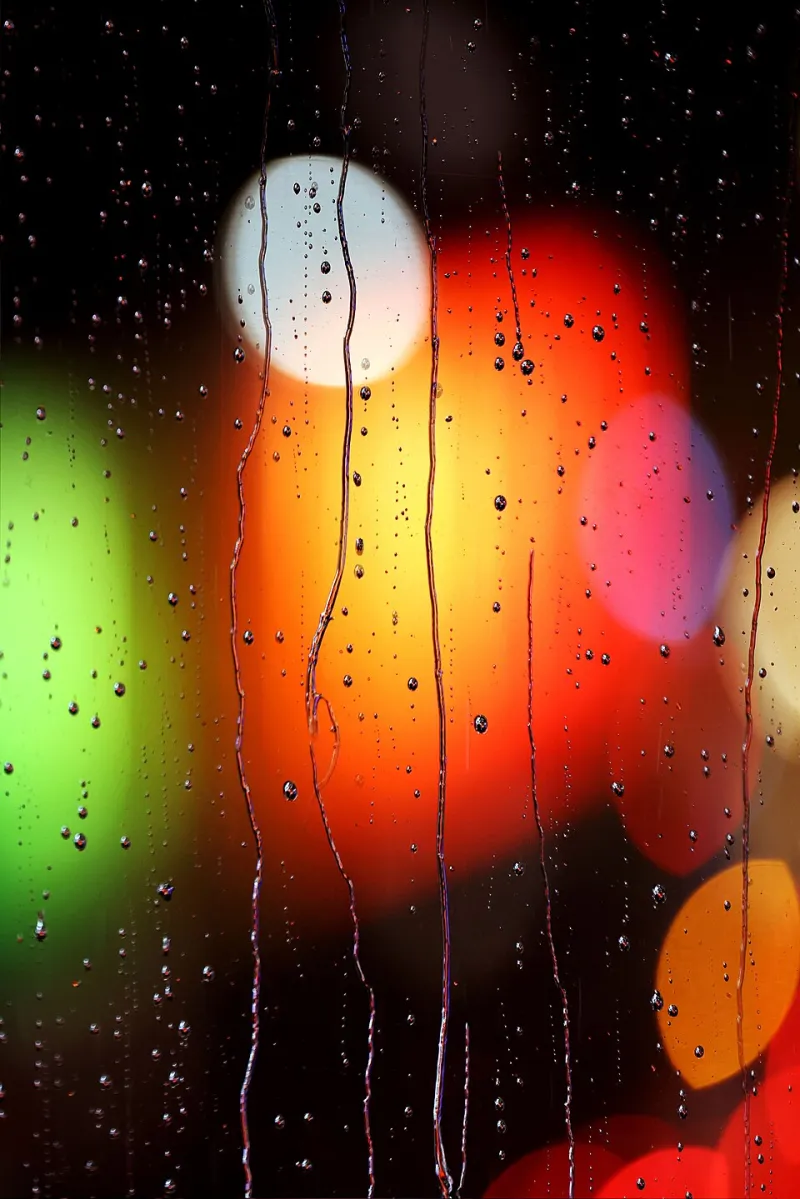
Every time you deliberately open up your aperture and watch a background dissolve into soft, glowing circles of light, you're participating in a tradition that stretches back nearly a century. Bokeh — the word itself is borrowed from the Japanese boke, meaning blur or haze — didn't emerge fully formed from a photography forum in the 1990s. It was built, piece by piece, by photographers who understood that what falls out of focus can be just as expressive as what stays sharp.
This is the story of those photographers. The ones who made beautiful blur a language.
Henri Cartier-Bresson and the Geometry of Selective Focus
You can't talk about photographic intentionality without starting with Henri Cartier-Bresson. The French master is most famous for his concept of the "decisive moment" — that fraction of a second when composition, light, and subject align perfectly. But embedded in his work is something equally important: a radical understanding of how selective focus shapes emotional weight.
Cartier-Bresson frequently worked with a 50mm lens at moderate apertures, but he understood instinctively how to use focus as a framing tool. In many of his most celebrated images, near-foreground elements blur into soft abstraction while a distant subject snaps into clarity — or vice versa. The blur isn't accidental. It's architectural. It builds the image the way a wall builds a room.
His influence on the visual grammar of selective focus cannot be overstated. Every photographer who has ever used a blurred foreground element to create depth owes something to the way Cartier-Bresson treated the entire frame — sharp and unsharp alike — as compositional material.
Fan Ho and the Poetry of Urban Haze
If Cartier-Bresson gave us the structure of selective focus, Hong Kong photographer Fan Ho gave us its soul.
Working primarily in the 1950s and 60s, Ho documented the teeming streets, harbor mists, and shadowed alleyways of mid-century Hong Kong with a visual sensibility that remains breathtaking today. His images are studies in atmosphere — and bokeh, in the broadest sense, is central to that atmosphere. Ho used mist, smoke, overexposed light sources, and selective focus to create images where the boundary between sharp and soft feels almost musical. Things emerge from blur. Figures dissolve back into it.
Ho wasn't just capturing Hong Kong; he was interpreting it. The blur in his work carries cultural and emotional weight — it evokes impermanence, the fleeting nature of a city in transformation, the way memory softens the edges of experience.
For contemporary photographers interested in using bokeh as metaphor rather than mere technique, Fan Ho's body of work is essentially a masterclass.
Ernst Haas and the Abstraction of Color
Austrian-American photographer Ernst Haas pushed the boundaries of what blur could mean in a different direction entirely. Where Cartier-Bresson used focus to clarify and Ho used it to poeticize, Haas used motion blur and shallow depth of field to abstract — to push photography toward something closer to painting.
His color work from the 1950s onward is full of images where the subject is almost entirely dissolved into fields of color and light. Bullfighting sequences where the matador becomes a smear of red and gold. Street scenes where traffic lights bleed into long ribbons of luminance. Haas understood that blur could strip an image of its documentary function and replace it with pure feeling.
This is the lineage that connects to contemporary long-exposure and intentional camera movement (ICM) photography — a community that has exploded in the US over the last decade. Haas was doing it before most of them were born.
Hiroshi Sugimoto and the Long View
Japanese-American photographer Hiroshi Sugimoto takes blur to its logical extreme — and in doing so, reveals something profound about the nature of focus itself.
His famous "Theater" series, begun in the 1970s, captures movie theater interiors with exposures long enough to capture an entire film — the result is a screen of pure white light surrounded by the sharp, ornate architecture of the theater itself. But his "Seascapes" series is perhaps even more instructive for understanding what selective focus and blur can communicate philosophically. By rendering horizon lines with absolute sharpness while allowing sky and sea to exist in tonal gradations that approach abstraction, Sugimoto uses the language of focus to talk about time, perception, and the limits of human vision.
For photographers who want to think about bokeh not just as a background effect but as a conceptual framework, Sugimoto is essential viewing.
The Instagram Generation and Bokeh as Brand Identity
Fast forward to the 2010s and the rise of visual social media, and something interesting happened: bokeh became democratized — and then immediately weaponized as a marker of quality and intentionality.
Photographers like Alex Strohl, with his sweeping landscape portraits shot wide-open against mountain backdrops, helped establish a particular kind of bokeh-forward aesthetic that millions of US-based creators emulated. The blurred background became shorthand for "serious photographer" in a way that was both genuinely earned and occasionally superficial.
But the more thoughtful corners of Instagram and later platforms like VSCO and Glass have seen a more nuanced conversation develop — one that traces back directly to the masters above. Photographers like Miki Asai in Japan and Brandon Woelfel in New York have built huge followings by using bokeh not just as background decoration but as emotional atmosphere, carrying the tradition of Fan Ho and Ernst Haas into the social media age.
What the Canon Teaches Us
Look across this lineage — from the structured geometry of Cartier-Bresson to the misty poetry of Fan Ho, from the bold abstraction of Haas to the philosophical depth of Sugimoto — and a clear principle emerges.
The greatest practitioners of blur never used it casually. Every soft edge, every dissolved background, every glowing circle of out-of-focus light was a decision. It carried meaning. It told the viewer where to look, how to feel, what to remember.
That's the real lesson of the bokeh canon. The blur isn't the point. The intention behind the blur is the point.
Next time you're setting up a shot and reaching for that wide aperture, take a second to ask yourself what you want the soft parts of your image to say. The masters did. And their answers are still echoing through every beautiful, blurry frame being made today.