Blur as Rebellion: How Videographers Are Using Depth of Field to Fight Back Against AI Sameness

Photo: Lorie Shaull, CC BY-SA 2.0, via Wikimedia Commons
Scroll through your Instagram Reels or TikTok feed for ten minutes and something starts to feel... off. The colors are too clean. The compositions are a little too balanced. The lighting never quite behaves the way it does in real life. What you're noticing — whether you can name it or not — is the creeping homogeneity of AI-assisted and algorithmically optimized content. And a whole community of videographers has decided they've had enough.
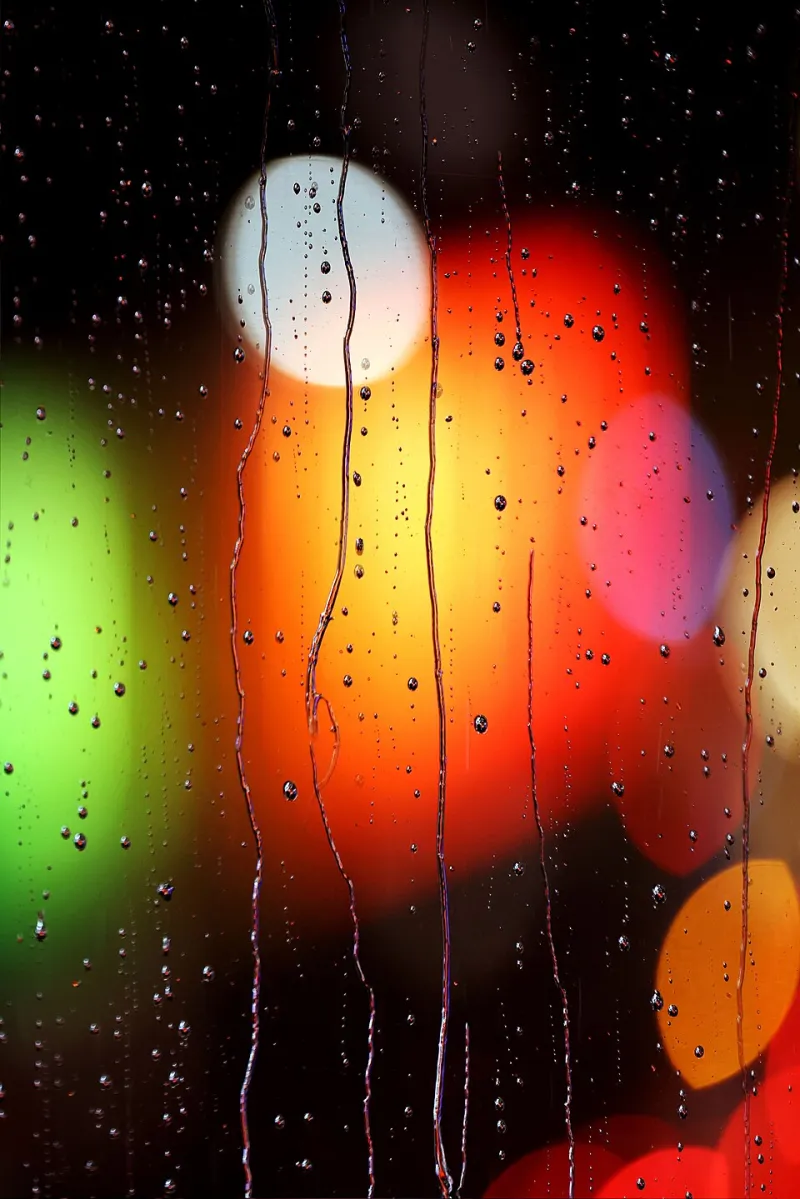
Their weapon of choice? Bokeh. Specifically, the kind of intentional, carefully crafted depth of field that only happens when a skilled human hand sets a fast prime lens, makes a deliberate focus pull, and lets the background melt into something that feels alive.
The Algorithm Can't Blur Like That
Here's the thing about AI-generated video and heavily processed smartphone footage: it's getting remarkably good at mimicking a lot of things. Lighting. Texture. Even facial expressions. But bokeh — true optical bokeh produced by glass and aperture and physics — is still stubbornly, beautifully human.
"You can tell immediately," says Marcus Delgado, an indie filmmaker based in Austin, Texas, who's been shooting narrative short films for about eight years. "There's a quality to real shallow depth of field that AI just doesn't replicate convincingly yet. The way focus falls off, the way the out-of-focus elements still have weight — it reads as authentic to viewers even if they can't explain why."
Delgado's recent short film, shot on a vintage Helios 44-2 adapted to a Sony mirrorless body, racked up nearly 400,000 views across platforms — not because of a trending sound or a viral hook, but because commenters kept saying some version of the same thing: this feels real.
That's the magic word right now. Real.
Depth of Field as Emotional Language
Filmmakers have always used focus as a storytelling tool. Think of the classic rack focus — pulling from a character's face to an object in the background — as a way of directing attention and building meaning. But in the current landscape, the decision to use shallow depth of field has taken on an additional layer of significance.
It's not just an aesthetic choice anymore. It's a statement.
"When I shoot with a wide-open aperture and let the background blur out, I'm making a choice that AI content can't casually replicate," explains Priya Nair, a documentary videographer from Chicago who primarily creates content for social platforms. "It's become shorthand for 'this took craft.' Audiences are responding to that even subconsciously."
Nair recently documented a local street food festival using a 50mm f/1.4 lens, keeping her subjects razor-sharp against a wash of blurred market lights and crowd movement. The result looked like nothing else in her feed — warm, textured, grounded. It performed three times better than her more polished, tripod-locked content.
There's a psychological dimension here worth unpacking. Human vision naturally creates its own depth of field — we focus on what matters and let the rest fall away. When a video mirrors that behavior through optical bokeh, it triggers something primal. It feels like seeing, not like watching a render.
The Gear Renaissance Running Parallel
Interestingly, this creative movement is driving a pretty significant gear conversation. Vintage lenses — the kind your uncle might have stashed in a closet since the 1970s — are having a serious moment. Lenses like the Soviet-era Helios 44-2, the Minolta Rokkor 58mm f/1.4, or the Canon FD 55mm f/1.2 produce bokeh characteristics that are genuinely impossible to digitally synthesize convincingly. The swirly bokeh of the Helios, for instance, has become almost a signature aesthetic for a subset of indie video creators.
Adapters have made these old lenses accessible on modern mirrorless systems, which means the barrier to entry is surprisingly low. You can pick up a Helios 44-2 on eBay for under $50 and adapt it to a Sony or Fujifilm body for another $20. The resulting footage has a character — a personality — that no amount of post-processing can replicate.
"I think people are realizing that the most interesting visual textures right now are coming from old glass," says Delgado. "It's kind of ironic. The future of authentic video is being written with fifty-year-old lenses."
Focus Pulls Are Having a Moment
Beyond static shallow depth of field, the focus pull — manually shifting focus from one subject to another mid-shot — is re-emerging as a powerful narrative device in short-form video. It's the kind of technique that requires practice, feel, and timing. It cannot be automated. And audiences, trained by years of hyper-cut, jump-edited content, find it almost startling in its deliberateness.
Creators like Nair have started incorporating manual focus pulls into their social content specifically because the technique reads as intentional. "When you pull focus slowly and deliberately, you're telling the viewer: slow down, pay attention, there are two things here that matter," she says. "It creates a kind of visual sentence. AI content doesn't do that yet."
What This Means for the Visual Landscape
We're at an interesting inflection point. As AI-generated content floods every platform and visual noise reaches an almost deafening pitch, the creators who are cutting through aren't the ones with the best AI tools. They're the ones leaning hardest into what makes optical, human-crafted imagery irreplaceable.
Bokeh is, at its core, a reminder that a human was present. That someone chose a lens, chose a distance, chose what to keep sharp and what to let go. In an era of algorithmic sameness, that choice is louder than ever.
So if you've been thinking about dusting off that fast prime lens or hunting down a vintage piece of glass to try on your mirrorless body — now might be exactly the right time. Not just because bokeh looks beautiful. But because right now, it means something.