Blades, Rings, and Cat-Eyes: The Secret Geometry Hiding in Your Background Blur
Look at the out-of-focus highlights in your last batch of photos. Really look. Are they circles? Hexagons? Do they flare out into little crescents at the edges of the frame, like tiny almonds or cat eyes? That shape isn't random — it's a fingerprint, a physical record of what happened inside your lens the instant you pressed the shutter.
At I Am Bokeh, we spend a lot of time talking about how much blur a lens produces. Today we're talking about what that blur actually looks like — because the geometry of your bokeh can change the entire mood of an image.
The Aperture Is the Artist
Start with the most obvious culprit: the aperture diaphragm. When your lens is wide open, the blades retract and light passes through a roughly circular opening. That's why fast prime lenses at f/1.4 tend to render round, buttery orbs — there's nothing in the light path to interrupt the shape.
Stop down to f/5.6 or f/8, though, and the blades close in, forming a polygon. The number of blades determines the number of sides:
- 9 blades? You get a smooth, near-circular nonagon that most eyes read as round.
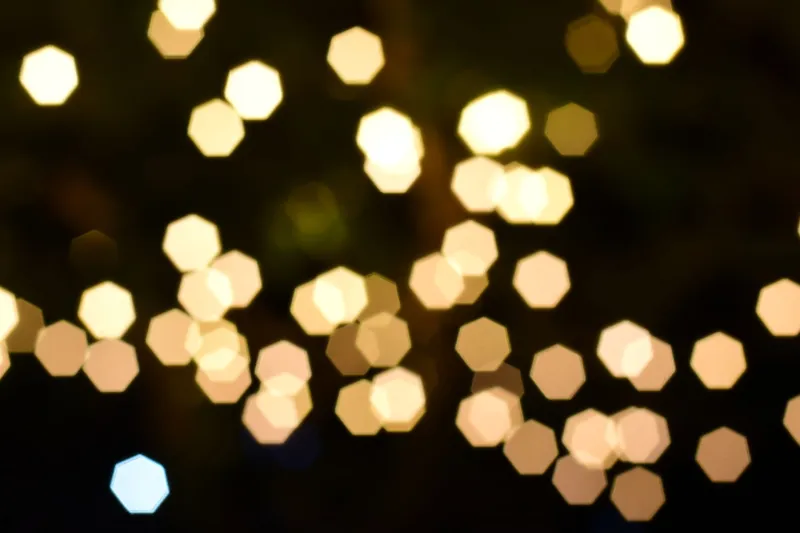
- 7 blades? Heptagons start showing up in every streetlamp and string light.
- 5 or 6 blades? Now you're in full-on geometric territory — hexagons and pentagons stamped across the frame.
This is why vintage lenses from the 1970s and '80s, which often had only six aperture blades, are famous for their chunky, stop-sign-shaped highlights. Some photographers find it distracting. Others chase it on purpose.
Edge-of-Frame Cat Eyes: Optical Vignetting at Work
Now for the weird one. Shoot a point of light near the corner of your frame with a fast lens, and it may stretch into a crescent — the classic "cat-eye bokeh."
The cause is something called optical vignetting. The long barrel of a fast lens physically blocks light rays arriving at steep angles, effectively cropping the aperture opening when viewed from off-axis. Near the edges of the frame, the circular exit pupil becomes an ellipse, and your highlight becomes an almond shape.
Whether this is a flaw or a feature is a matter of taste. Cat-eye bokeh adds a swirly, almost painterly energy to wide-open portraits and nightscapes. It's a hallmark of lenses like the legendary Canon EF 50mm f/1.2L and the Soviet-era Helios 44-2, whose swirly, distorted corners have inspired an entire subculture of shooters.
Soap Bubbles and the Cult of the Weird
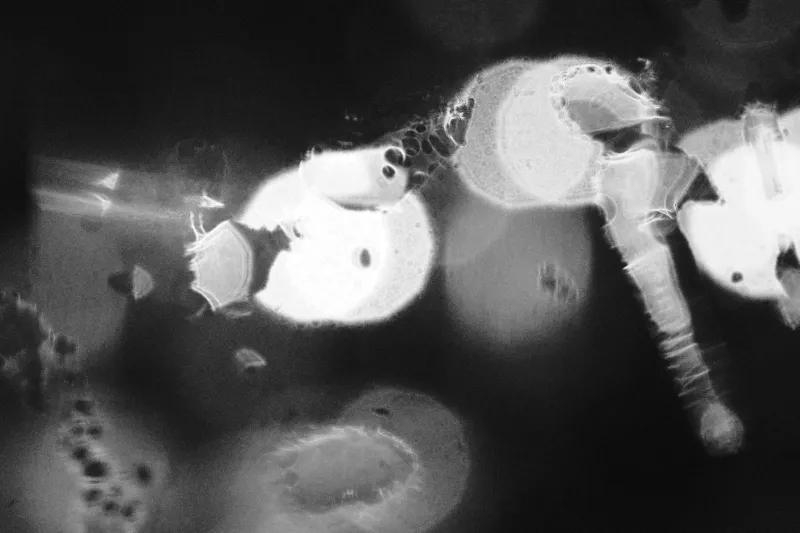
Then there's the rarest beast: "bubble bokeh," where out-of-focus highlights show a bright ring around a softer center, like a soap bubble floating through your frame. It happens when spherical aberration isn't fully corrected — the edges of the lens focus light slightly differently than the center, creating that glowing rim.
Old, uncoated, or deliberately under-corrected lenses produce it best. The Meyer-Optik Görlitz Trioplan 100mm f/2.8, a German design from 1916 that's been revived and discontinued more times than a soap opera character, is the poster child. Photographers pay serious money for original copies purely because of how it renders backgrounds — the sharpness is almost beside the point.
Other cult classics with signature blur include:
- Helios 44-2 (58mm f/2): Swirling, spinny backgrounds that made it a portrait darling on eBay and at every US camera swap meet.
- Petzval lenses (the original 1840s design, revived by Lomography): Dramatic swirly edges and glowing centers straight out of a Civil War-era daguerreotype.
- Canon EF 135mm f/2L: Not weird at all — just famously smooth, round, and creamy, which is its own kind of cult following.
Which Shape Flatters Which Subject?
So does shape matter creatively? Absolutely.
Round, neutral bokeh is the safe bet for corporate headshots, product photography, and anything where the client wants the subject to pop without the background drawing attention. It reads as clean and professional.
Polygonal bokeh can add texture and character to environmental portraits, street scenes at night, and holiday light displays. A field of hexagons behind a subject can feel nostalgic, even filmic.
Cat-eye and swirly bokeh thrives in artistic portraiture, concert photography, and anything that wants a dreamy, slightly surreal edge. It tells the viewer that the blur itself is part of the composition, not just an absence of focus.
Bubble bokeh is pure romance. Wedding photographers in particular hunt for it, because glowing rings behind a bride or in a candlelit reception scene look like something out of a fairytale.
How to Experiment Without Buying Anything
Before you go dropping cash on a 50-year-old East German lens, try this:
- Shoot wide open, then stop down. Compare highlight shapes at f/1.8, f/4, and f/8 on the same scene. You'll instantly see your lens's aperture geometry.
- Push highlights to the corners. Find a scene with string lights or distant streetlamps and place them at the frame edges. Check for cat-eye stretching.
- Make your own aperture. Cut a shape — a heart, a star, a hexagon — into black cardstock and hold it over the front of your lens. Every highlight in frame takes that shape. It's a party trick, but it teaches you exactly how the diaphragm works.
The Shape of Your Signature
Bokeh shape is one of those details that separates photographers who use blur from photographers who design with it. Two lenses at the same focal length and aperture can produce completely different backgrounds — and once you start noticing the geometry, you can't unsee it.
So the next time you're lens shopping, don't just read the sharpness charts. Look at the blur. Count the blades. Check the corners. The shape of the light might just become your signature.