Five Bucks, Fifty Millimeters: Why America's Flea Markets Are the Last Great Lens Shops
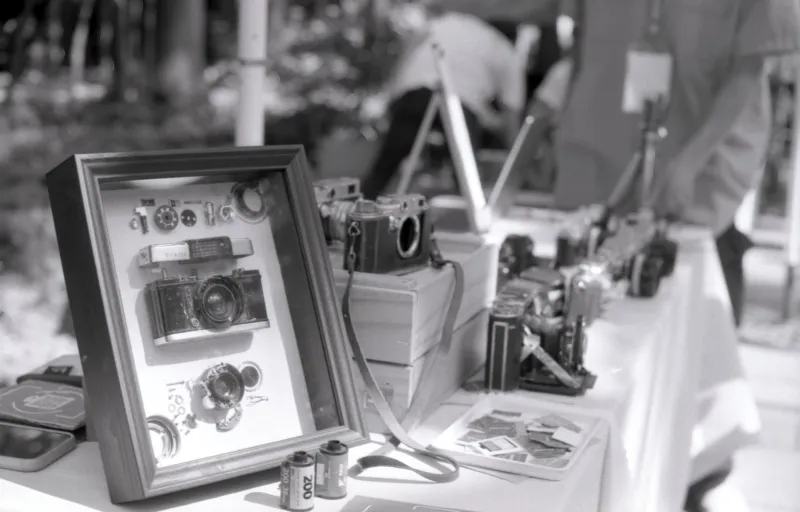
There's a moment every thrift-hunting photographer knows. You're elbow-deep in a milk crate of junk at a swap meet outside Tulsa, and there it is: a scuffed Minolta MD 50mm f/1.7, priced at eight bucks because the seller thinks it's "just an old camera part."
That "old camera part" might render backgrounds softer than a lens costing ten times as much.
The Vintage Glass Gold Rush Is Real
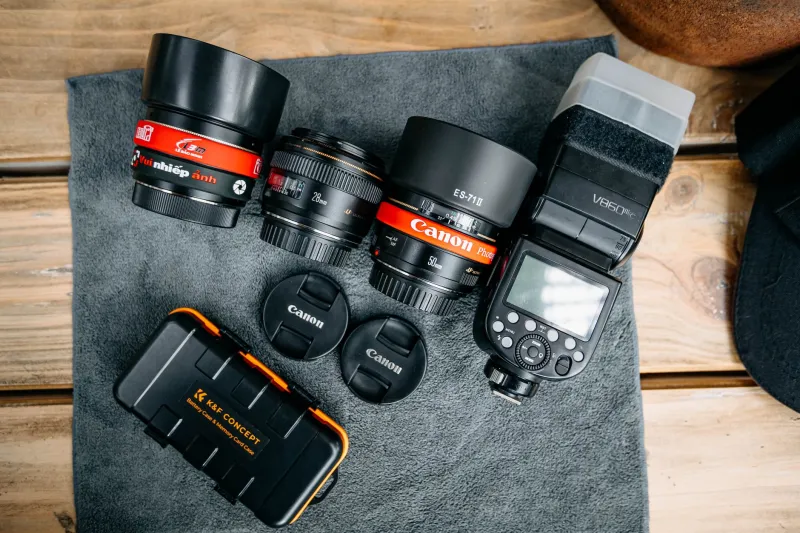
Something quietly wonderful is happening at flea markets, estate sales, and church rummage sales across the country. The film-era gear that flooded American closets between 1965 and 1990 is being rediscovered by a generation of mirrorless shooters who've figured out a secret: those manual-focus primes your grandpa left in the hall closet often have more soul than anything you can buy new.
The reasons are part physics, part fashion. Modern lenses are engineered for clinical sharpness — every aberration corrected, every corner crisp. Vintage glass, on the other hand, was designed with the coatings, grinding tolerances, and optical philosophies of its era. Those "flaws" — spherical aberration, uncorrected coma, wild field curvature — translate directly into swirly, painterly background blur that simply cannot be replicated by current production lenses, no matter what the marketing copy says.
Photographers in Portland, Austin, and Brooklyn are building entire portfolios around $30 Pentax SMC primes. Some are shooting portraits on 1970s Minolta Rokkors that cost less than a nice lunch. And the swirl-hunters — the folks chasing that dreamy Petzval-style edge blur — are paying attention to lenses like the Helios 44-2, a Soviet-era 58mm that's become the unofficial mascot of the movement.
What to Hunt For (and What to Leave Behind)
Not every dusty lens is a diamond. Here's the quick field guide:
The usual suspects. Minolta MD/MC primes, Pentax K-mount and M42 screw-mount lenses, Canon FD glass, and Olympus OM Zuiko primes are all abundant, cheap, and adapt beautifully. Expect to pay $20–$60 for a clean 50mm f/1.7 or f/1.4.
The sleeper picks. Keep an eye out for the Minolta MC Rokkor 58mm f/1.4 (famously swirly), the Canon FD 55mm f/1.2 SSC (a bokeh monster if you find one cheap), and anything labeled "auto" in M42 mount from brands like Super Takumar — those early Super Multi Coated Takumars have a cult following for good reason.
Walk away when: the glass shows haze or fungus (cloudy elements kill contrast and can spread), the aperture blades are oily and sluggish, or the focus ring grinds like it's full of sand. A few cleaning marks are fine. A lens that rattles is not.
Adapting Old Glass to New Bodies
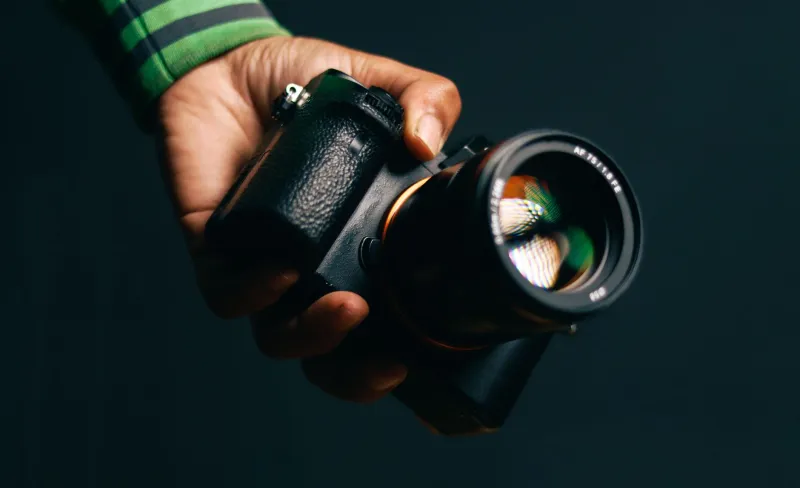
Here's the beautiful part: almost all of this glass adapts to modern mirrorless cameras with a simple, cheap mechanical adapter. No electronics, no autofocus — just metal rings and glass.
- Sony E-mount, Nikon Z, Canon RF, Fuji X, L-mount: a $15–$30 dumb adapter gets you shooting. M42 lenses are the easiest of all — it's a universal screw mount for a reason.
- Focus peaking is your best friend. Every modern mirrorless camera highlights in-focus edges on screen, which makes manual focusing far easier than it sounds. After a weekend, it becomes muscle memory.
- Mind the flange distance. Some mounts (Canon FD on certain bodies, for example) need a slightly pricier corrective adapter. M42 and Pentax K adapt to nearly everything with zero drama.
One caveat for Canon RF and Nikon Z shooters: check your adapter's quality. Cheap adapters with slop in the mount will turn your manual focus experience into a guessing game.
The Thrill Is the Point
Ask anyone deep in this hobby why they do it, and the answer is rarely just about image quality. It's the hunt. It's paying nine dollars for a lens, cleaning sixty years of dust off the front element, and discovering it renders highlights like melted butter. It's shooting a portrait session on glass older than your parents and getting comments asking what $2,000 lens you used.
There's also something quietly sustainable about it. Every Helios rescued from a garage sale bin is a lens that doesn't get manufactured, shipped, or landfilled. It's gear recycling at its most romantic.
So this weekend, skip the online checkout cart. Hit the flea market, the estate sale, the booth at the back of the antiques mall that smells like pencil shavings and old leather. Bring a phone flashlight to check the glass, a few crumpled twenties, and an open mind.
Your next favorite lens is out there, sitting in a shoebox, waiting for somebody who understands what it can do. It might as well be you.