Coffee, Chrome, and Creamy Light: Why the American Diner Is the Best Free Studio You've Never Booked
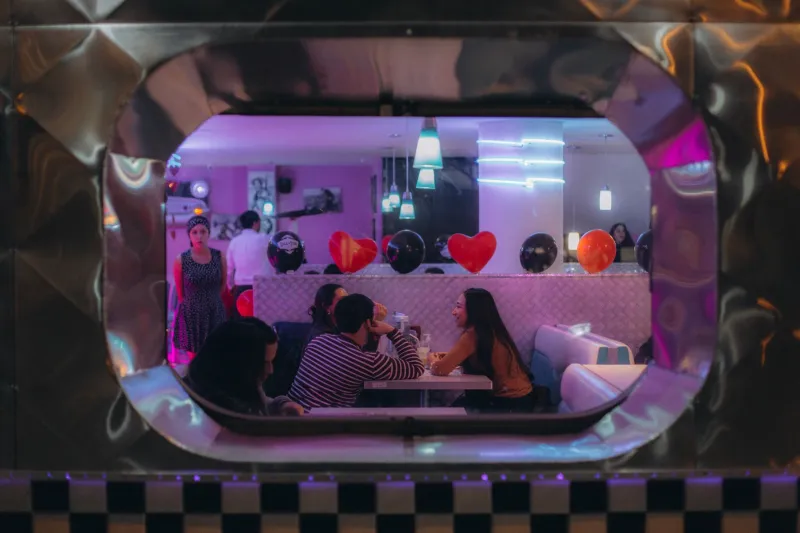
There's a moment, usually around 7:15 a.m., when a diner window stops being a window and starts being a light source. The fog outside hasn't burned off yet, the neon OPEN sign is still fighting the sunrise, and the chrome trim along the ceiling is quietly bouncing highlight after highlight into the background of your frame. If you've never shot in a diner on purpose, you're missing one of the most reliable bokeh environments in America — and it costs you the price of a bottomless cup.
The Diner Is a Studio That Built Itself
Think about the architecture for a second. Big plate-glass windows, often facing east or wrapping around a corner. Deep interiors with warm tungsten bulbs strung along booths. Chrome accents everywhere, from stool legs to napkin dispensers. Add in the layered depth — sidewalk, window glass, counter, back kitchen — and you've got multiple planes of light at different distances, which is exactly what bokeh needs to sing.
Photographer Marla Chen, who has spent five years shooting a series called Corner Booth America across Route 9 diners in New Jersey, puts it simply: "A diner gives you foreground, midground, and background light for free. I've shot in studios that cost $300 an hour and didn't layer as well as a 6 a.m. coffee counter in Hackensack."
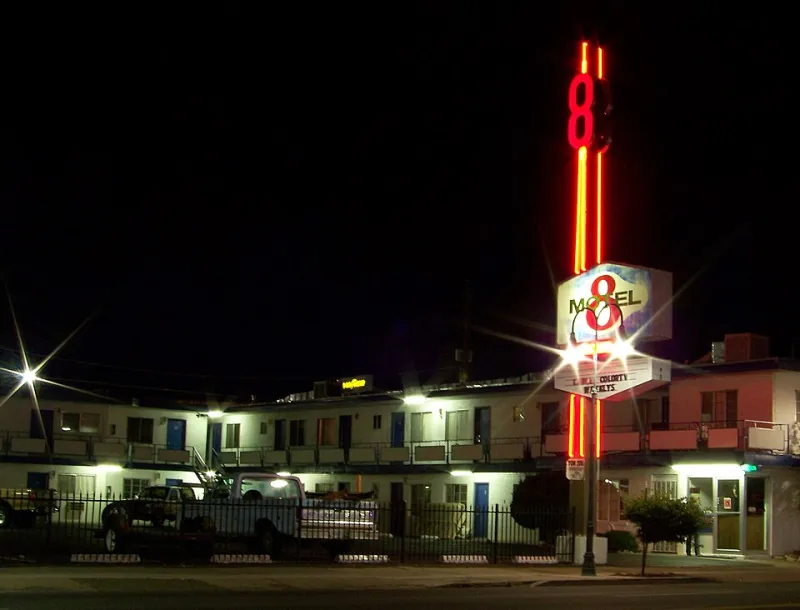
The point isn't nostalgia — though the aesthetic certainly leans on it. The point is that the diner solves the hardest problem in bokeh photography: finding multiple small, bright light sources at varying depths behind your subject. A window with parked cars outside gives you specular glints. A neon sign gives you colored orbs. The kitchen pass-through gives you warm, diffuse glow. It's a lighting diagram disguised as a breakfast joint.
Timing Is Everything: The Fog Window
If you take one tip from this article, take this one: shoot early. Not just for the light quality, but for the atmosphere.
"Morning fog is the cheat code," Chen says. "Fog turns every distant headlight and streetlight into a soft, glowing disc instead of a hard point. Your bokeh balls get this halated, painterly quality that you just can't fake with a filter."
The sweet spot runs roughly from 30 minutes before sunrise to an hour after. The second-best window is blue hour into full dark, when the neon signage and interior tungsten do all the heavy lifting. Midday is the weakest — harsh sun flattens the specular highlights and blows out the window, killing the contrast between sharp subject and soft background that makes the look work.
Rain helps too. A wet parking lot doubles every light source, and drops on the window glass add texture that reads beautifully out of focus.
Where to Sit: The Angle Game
Seating strategy matters more than gear. A few field-tested approaches:
- The corner booth is the crown jewel. Corner windows give you two walls of light, which means background highlights on both sides of your subject. Call ahead if you can — regulars know, and these seats go fast.
- The counter stools put you closest to the window glass, which lets you shoot across the interior toward the back of the diner. Long compression, layers of depth, and the kitchen glow behind your subject.
- Facing in, shooting out is the underrated move. Put your subject against the interior and shoot toward the window. The street beyond — cars, signs, passing pedestrians — becomes a fully out-of-focus world of moving light.
Avoid sitting with the window directly behind you. You want the window light working in your frame, not flattening it.
Settings That Hold Up Over Hash Browns
You don't need exotic glass, but a few principles apply:
- Aperture: f/1.8 to f/2.8 is the workhorse range. Wide enough to melt the background, stopped down enough to keep both eyes on a portrait sharp.
- Shutter speed: interiors are dimmer than they feel. Stay at 1/125 or faster if your subject is moving — servers, pour-overs, hands on mugs.
- ISO: don't be shy. Modern sensors handle ISO 3200 in a dim diner without complaint, and a little grain suits the aesthetic anyway.
- Focal length: a 35mm or 50mm prime covers most booths. A fast 85mm shines at the counter, where you can compress the whole interior into layers of blur.
One more thing: mind the glass. Shoot at a slight angle to the window rather than straight-on to dodge your own reflection, and consider a lens hood even indoors — chrome bounces light in from everywhere.
Ask First, Shoot Kind
A quick note on etiquette, because this matters. Diners are working businesses, not public parks. Buy food, tip well, and ask the staff before you settle in for a long shoot. Most owners of classic spots are genuinely proud of the place and, more often than not, curious about the camera. Some of Chen's best frames came after the cook asked what she was doing and offered to pose with the day's pie special.
"The diner gives you the light," she says. "But the people in it are the picture. Don't treat the booth like a set — treat it like someone's kitchen, because for a lot of folks, it is."
Your Next Frame Is Already Pouring Coffee
The beauty of the diner window is accessibility. No permits, no lighting kit, no rental studio. Just a fast lens, an early alarm, and a willingness to drink a second cup of coffee while the fog does its thing. Somewhere within twenty minutes of most American towns, there's a corner booth with two walls of window light and a neon sign waiting to melt into twelve perfect orbs behind someone's shoulder.
Go find it. Order the pancakes. The light's already there.