Dust, String Lights, and a Six-Dollar Ticket: Chasing Creamy Blur at the Minor League Ballpark
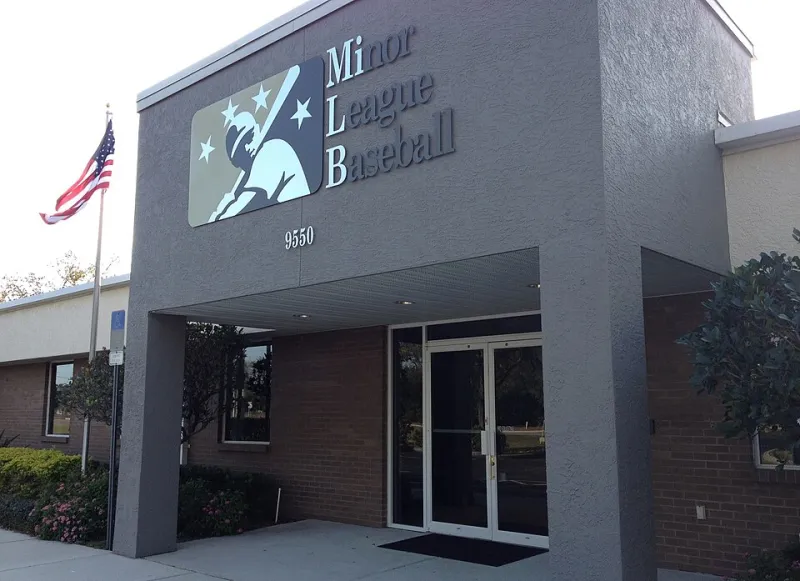
Photo: MiLB PR, CC BY-SA 3.0, via Wikimedia Commons
There's a moment that happens at roughly 7:40 p.m. in a small-town ballpark somewhere between, say, Dayton and Durham. The sun drops behind the left field light stand, the outfield scoreboard bulbs flicker on, and the whole park shifts from a flat, honest daylight scene into something closer to a carnival. If you're holding a fast prime and standing near the third base line, that moment is a gift.
Major League stadiums are engineered experiences — polished sightlines, controlled lighting, security guards with opinions about where you can stand. Minor league parks are the opposite. They're cramped, quirky, and lit like a string of patio lights somebody's uncle strung up in 1987. For photographers who chase out-of-focus glow, that's not a flaw. That's the whole point.
Why the Small Parks Win
The magic of a minor league stadium comes down to layering. Big league venues tend to be either fully lit or fully dark, with clean sightlines that separate subject from background. Small parks are a jumble: string lights along the grandstand railing, sodium-orange light towers, a Ferris wheel beyond the right field wall in the towns that have one, concession stand windows spilling warm light onto concrete.
Put a batter in front of that mess with a lens opened up to f/1.8, and all of it melts. The light towers become soft orbs. The string lights stretch into ribbons of gold. The crowd becomes an impressionist painting of skin tones and team colors. You're not just isolating a subject — you're embedding them in a field of exploded light that says summer without a single caption.
And here's the kicker: the admission price. A lawn seat at a High-A game runs about what you'd pay for a fancy coffee. Compare that to shooting credentials at an MLB park, which range from expensive to impossible for a civilian.
Working the Golden Hour
Timing matters more than gear. Arrive an hour before first pitch and walk the concourse. The sun coming in low and raking across a dusty infield is doing half your work for you — backlit dust, rim-lit caps, and a warm color cast that flatters everything it touches.
A few spots worth scouting every time:
- The grandstand railing. Shoot down the line of string lights so they compress into overlapping circles behind your subject. Fans eating nachos, kids leaning on the rail — all of it works.
- Behind the backstop. Chain-link is usually a dealbreaker at f/8, but open up past f/2 and the diamond pattern dissolves into a faint texture, almost like shooting through gauze.
- The concourse at dusk. Food stand windows and vendor carts give you pools of warm light. A shooter's favorite trick: position a subject at the edge of one pool so half their face catches the glow and the background falls off into black-and-amber bokeh.
Fast Action, Shallow Glass
Baseball moves in bursts — a pitch, a swing, a stolen base — which makes it friendlier to shallow depth of field than most sports. You're not tracking continuous motion like soccer; you're waiting on a single decisive moment.
Practical setup that won't wreck a budget:
- Shutter first. You need 1/1000s to freeze a bat. If that forces your ISO into the stratosphere after sundown, 1/640s will still catch most swings with a bit of motion blur in the hands — which often looks better anyway.
- One fast prime. An 85mm f/1.8 or a used 135mm f/2 is the classic pick. On a crop sensor, a 50mm f/1.8 gets you similar reach. None of these cost real money anymore on the used market.
- Pre-focus on a zone. Focus on the batter's back shoulder during warmup swings, switch to manual, and wait. When the pitch comes, you're shooting, not hunting focus.
- Embrace ISO. A noisy frame with gorgeous background separation beats a clean, flat, f/5.6 snapshot every single time. Modern sensors shrug off ISO 6400; lean into it.
Don't Forget the Fans
The players get the stats; the fans get the atmosphere shots. Between innings, turn around. The seventh-inning stretch, a kid with a glove too big for his hand, a grandfather explaining a close play — these are the frames that make a ballpark gallery feel human. Grandstand seating also gives you natural elevation, so backgrounds compress and the crowd behind your subject turns into a soft, colorful wash.
The Cheap-Seat Manifesto
There's a running theme in American photography: the best light is usually where nobody with expensive credentials is standing. Minor league baseball is that idea wearing a mascot costume and throwing t-shirts into the stands. The parks are modest, the light is messy, and the backgrounds are busy in exactly the way that turns into liquid gold behind a wide-open lens.
So pick a town, check the schedule, and bring a single fast prime and one spare battery. Six dollars gets you in. The glow is free.